
Effective Betting Strategy: Tips for Smarter Wagering
Unlock Profits with betting tips!
What Makes a Betting Strategy Actually Work

Imagine two people at a racetrack. One throws darts at a board full of horse names, placing bets randomly. The other studies the racing form, analyzes past performance, and considers the track conditions. Who do you think has a better chance of winning? It's not about luck; it's about strategy. Successful betting is more like running a business than playing the lottery. It takes planning, analysis, and disciplined execution. Let's explore the core principles that separate profitable wagering from expensive entertainment.
Why does so much betting advice fall flat? Often, it's built on gut feelings and chasing hot streaks. But a solid betting strategy requires a different mindset—treating your wagers like investments, not gambles. Disciplined bettors carefully weigh risk and reward, knowing that long-term success comes from informed decisions, not emotional impulses.
This data-driven approach is increasingly crucial in the expanding online betting world. The global online gambling and betting market, valued at $88.44 billion in 2025, is projected to reach a whopping $245.45 billion by 2034, growing at a CAGR of 12.01%. This growth underscores the need for strategies that can adapt to new technology and changing consumer habits. Curious about the market? Discover more insights
The Importance of Data-Driven Decisions
Think about it: If relying on hunches worked, wouldn't we all be millionaires? Intuition often leads us astray, especially in betting. Effective betting strategies are grounded in data and analysis. Just as a business analyzes market trends, a smart bettor examines team performance, player stats, and historical data. This information provides a foundation for making informed decisions rather than relying on guesswork.
Key Elements of a Winning Strategy
A winning betting strategy has several key components:
Value Betting: Imagine finding a rare baseball card selling for far less than it's worth. That's value betting—identifying bets where the odds offered are higher than your calculated probability of the outcome. It's about finding hidden opportunities in the market.
Bankroll Management: This is more than just "betting what you can afford to lose." It's about strategically allocating your funds to maximize returns and minimize risk. Think of it as building a strong financial foundation for your betting activities.
Hedging: Imagine buying insurance to protect your car. Hedging in betting works similarly. It involves placing bets that offset potential losses from your initial wager, protecting your investment against unexpected outcomes.
By combining these elements with a disciplined approach, you shift from gambling to a calculated pursuit of long-term profit. In the next sections, we’ll dive deeper into each of these components, offering practical advice and real-world examples to help you build your own winning strategy.
Finding Value Where Others See Nothing
Imagine strolling through an antique shop. Most people see dusty old furniture and chipped teacups. You, however, spot a glint of gold beneath a pile of forgotten trinkets – a genuine Rolex, priced like a common wind-up toy. That, in essence, is value betting. It's not about blindly picking winners or chasing the latest hot streak. It's about recognizing hidden gems – bets where the bookmakers have underestimated the true probability of an outcome. This strategy hinges on spotting these discrepancies and exploiting market inefficiencies.
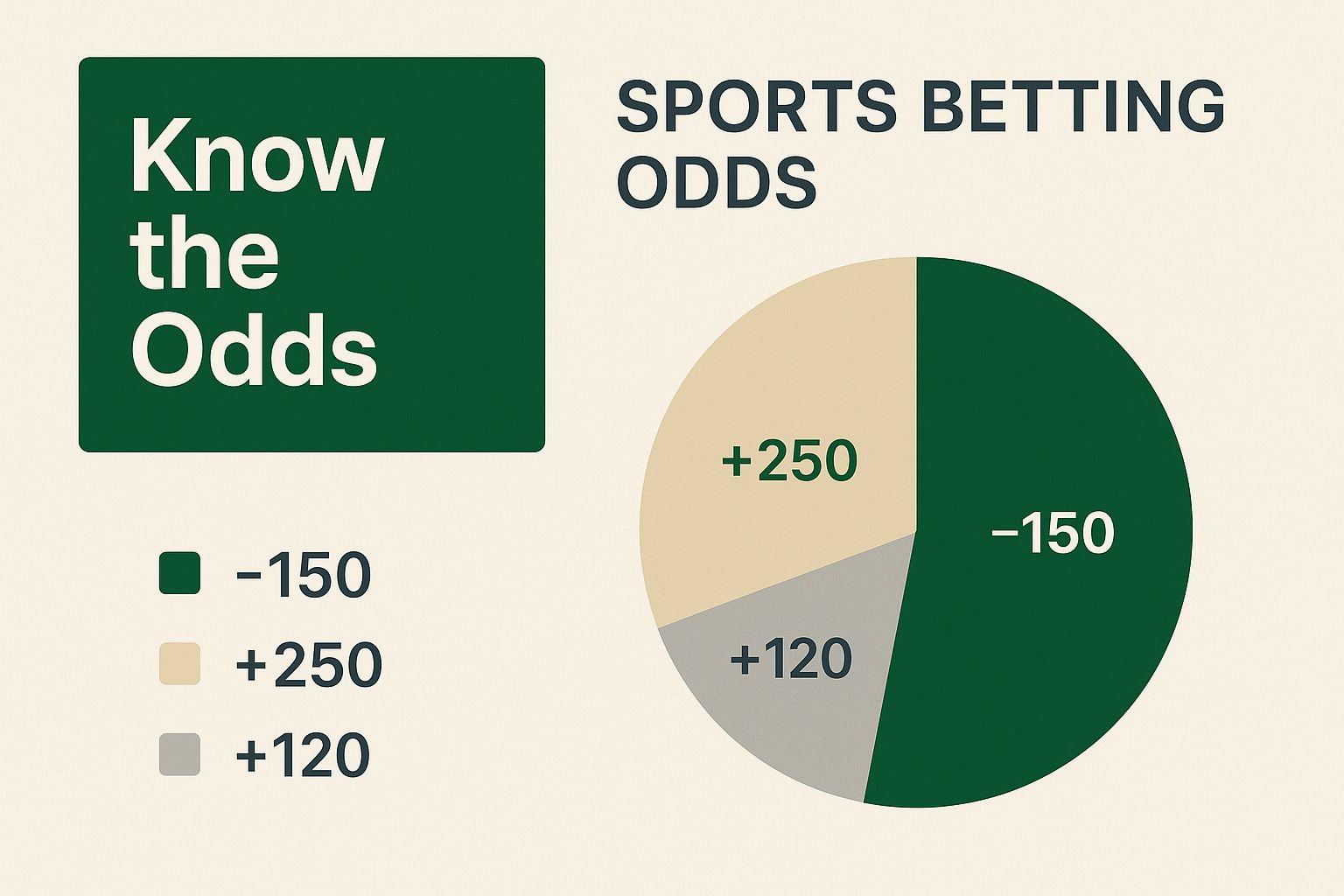
The infographic below shows a digital sports betting terminal, highlighting the various odds on offer and reminding us with a bold "Know the Odds" message how crucial understanding them really is.
Calculating Implied Probability
Let’s say a bookmaker offers odds of 2.0 on a team winning. This translates to an implied probability of 50% (1 / 2.0). But after doing your own research, you believe the team actually has a 60% chance of winning. That 10% difference? That's a value bet. It’s like finding that undervalued Rolex – a potential profit just waiting to be discovered.
Let's illustrate this with a table comparing various betting scenarios:
Table: Value Betting Opportunity Assessment Description: A comparison showing how to identify value bets by comparing bookmaker odds with calculated true probability.
| Scenario | Bookmaker Odds | Implied Probability | True Probability | Value Present |
|---|---|---|---|---|
| Team A to Win | 2.50 | 40% (1/2.50) | 50% | Yes |
| Team B to Win | 1.50 | 66.7% (1/1.50) | 60% | No |
| Draw | 3.00 | 33.3% (1/3.00) | 30% | No |
| Team A to Score First | 2.00 | 50% (1/2.00) | 55% | Yes |
As the table demonstrates, value bets arise when your calculated true probability exceeds the bookmaker's implied probability. In scenarios 1 and 4, the true probability is higher, suggesting a potential value betting opportunity.
Why Bookmakers Get It Wrong
Even the most sophisticated bookmakers with access to mountains of data can sometimes misjudge the odds. This can happen for a variety of reasons. They might overreact to public sentiment, have operational oversights, or simply make errors in their complex calculations. This means opportunities for sharp bettors to find value exist, even in highly liquid and competitive markets.
Developing Your Value Radar
Developing a keen eye for value takes practice and a systematic approach. It starts with understanding how to calculate implied probability and comparing it to your own assessment of an event’s likelihood. Tools like ValueBetFactory can be incredibly helpful, offering real-time alerts and in-depth data analysis to help you pinpoint those valuable discrepancies.
Building a Value Assessment System
Creating a robust value assessment system involves looking at many factors. Team or player form, head-to-head records, and even things like weather conditions can play a role. Just as important is understanding your own risk tolerance. How much are you comfortable potentially losing for a given potential return? This forms the foundation of your personal betting strategy.
Seasoned value bettors will tell you that patience is key. Lucrative value bets don’t appear every single day. However, by consistently applying a data-driven approach and avoiding emotional decisions, you can significantly improve your long-term betting performance. We'll cover another vital piece of a winning strategy next: bankroll management.
Bankroll Management: Your Financial Foundation
Think of your betting bankroll like the foundation of a skyscraper. You wouldn't build on shaky ground, right? The same principle applies to betting. No matter how clever your strategies, without a solid financial base, your betting endeavors are at risk. This goes beyond the usual "don't bet what you can't afford to lose" advice. We're talking about the sophisticated money management techniques that professionals use to navigate wins and losses, ensuring long-term success. For a deeper dive, check out our dedicated article on bankroll management: You might be interested in: Bankroll Management
Even if you're great at picking winners, a string of bad luck can wipe you out. It happens more than you think. Seasoned bettors will tell you: bankroll management is often the most crucial factor in long-term betting success, sometimes even more important than picking winning bets.

Practical Staking Systems
There are several ways to manage your bankroll, each with its own set of advantages and disadvantages.
Flat Betting: This is the simplest approach. Bet a fixed percentage of your bankroll on every wager, say 1%, regardless of how confident you feel. This provides stability and protects your funds from big swings.
Percentage Staking: This system adjusts your bet size based on your perceived advantage. Feeling very confident? Bet a larger percentage. Less sure? Bet a smaller percentage. This allows you to maximize returns on high-probability bets.
The Kelly Criterion: A more complex method, the Kelly Criterion uses a mathematical formula to calculate the ideal bet size, considering your estimated win probability and the odds offered. It aims to maximize growth over time, but requires careful calculation and risk assessment.
Each system behaves differently under different market situations. Understanding these nuances is vital for picking the right strategy for your betting style and comfort level with risk. The sports betting market is expected to hit $153.71 billion by 2029, emphasizing the need for adaptable strategies. Discover more insights.
Mastering the Psychology of Discipline
Effective bankroll management also requires mental discipline. Emotions can get the better of us, especially when facing losses. It's tempting to chase losses by increasing bets, hoping for a quick recovery. But this can quickly lead to disaster.
A well-defined betting strategy, coupled with emotional control, is essential. It prevents impulsive decisions and keeps you on track. This includes knowing when to walk away, even when the urge to bet is strong.
By mastering these principles – from practical staking plans to emotional control – you'll build a strong financial base for your betting. A healthy bankroll helps you weather short-term losses, seize opportunities, and ultimately, achieve long-term betting success. This foundation provides stability and helps avoid costly mistakes. Now, let's explore another crucial practice: hedging and risk management.
Hedging and Risk Control: Strategic Protection
Let's talk hedging. Think of it like insurance for your car – you might not need it every day, but when you do, you're really glad you have it. Professional bettors see hedging the same way. It's not about being afraid, it's about smart risk management. And that’s a core part of any serious betting strategy. So, let’s dive in and explore when hedging is a valuable tool and when it’s just an expensive way to calm your nerves. For a more in-depth look, check out our guide on hedging bets definition.
Understanding Hedging Techniques
Hedging is all about placing bets that offset potential losses from your initial wager. It's like having a backup plan. There are several ways to do this, from straightforward tactics to more complex maneuvers:
Back-and-Lay Hedging: This involves backing a selection with a traditional bookmaker and then laying the same selection on a betting exchange like Betfair. This can lock in a profit regardless of the outcome, which is especially useful in markets where things can change quickly.
Multi-Position Hedging: Imagine a football match. You could bet on both teams to score. This way, even if one team dominates, you still have a chance to win something. That's multi-position hedging in a nutshell – spreading your bets across different outcomes to reduce risk.
Partial Hedging: Maybe you don’t want to completely offset your initial bet. You’re feeling confident, but you still want to play it safe. With partial hedging, you only protect a portion of your potential winnings. This lessens your risk while leaving room for a big payout if your original prediction is right.
The Psychology of Risk Management
Even with the best strategy, emotions can get in the way. Fear and greed can cloud your judgment and derail your plans. That's where hedging can help. It's not about eliminating risk altogether; it's about managing it strategically and keeping a cool head.
Hedging in Action: Real-World Scenarios
Let’s say you bet on a dark horse team early in a tournament at long odds. Suddenly, they’re doing much better than expected, and your potential winnings are huge. Hedging lets you secure some of that profit, even if they don't go all the way.
On the flip side, imagine you've placed a substantial bet, and the odds turn against you dramatically. A hedging bet can act as a safety net, softening the blow of a potential loss.
Building a Consistent Income Stream
Experienced bettors use hedging not just for protection, but to build a steady income. They're not chasing the one big win; they're aiming for smaller, more predictable returns. Hedging helps them smooth out the ups and downs of betting, turning a potentially volatile activity into a more stable source of income.
To help visualize the various hedging strategies, let’s take a look at a comparison table.
Hedging Strategy Comparison: Different hedging approaches with their pros, cons, and ideal use cases
| Strategy Type | Risk Level | Profit Potential | Best Used When | Complexity |
|---|---|---|---|---|
| Back-and-Lay Hedging | Low | Guaranteed profit, but smaller | Odds have shifted significantly in your favor or against you | Moderate |
| Multi-Position Hedging | Medium | Moderate, depends on the number of positions | Uncertain about a specific outcome, looking for multiple winning possibilities | Medium to High |
| Partial Hedging | Medium to High | High if the initial bet wins, reduced loss if it loses | Confident in the initial bet but want to minimize potential losses | Low to Moderate |
This table highlights how each hedging strategy offers a unique balance between risk, reward, and complexity, giving you a framework to choose the best approach for your situation. Understanding these different approaches is crucial for effective risk management in your betting journey.
Using Data and Technology to Your Advantage
The days of relying on gut feelings and newspaper clippings for your betting strategy are long gone. Modern bettors are more akin to data scientists, using analytical tools to inform their choices. But remember, technology should enhance, not replace, your critical thinking. Let's explore which tools genuinely boost your performance and which are just costly distractions.
Leveraging Betting Software and Statistical Models
Betting software can automate tasks like tracking your bets, calculating odds, and even pinpointing potentially valuable bets. Think of it as a personalized research assistant, crunching numbers and highlighting key information. Statistical models, meanwhile, can help you dissect past performance data and forecast future results.
However, it's crucial to remember these are just tools. They provide raw data; you still need to interpret it and make your own decisions.

This screenshot from Bet365 shows a standard online sports betting interface. The platform offers a plethora of data, from live odds and match statistics to a variety of betting options. Effectively navigating this data is essential for any winning betting strategy.
Building Your Own Analysis Systems
You don't need to be a coding expert to harness the power of data analysis. Even simple spreadsheets can be incredibly useful for tracking your bets, analyzing outcomes, and spotting trends. Begin by logging your bets, the odds you received, and the final results.
Over time, this data will reveal your strengths and weaknesses. For example, you might discover you excel at predicting specific types of bets, or that you tend to overestimate your odds in particular sports. This self-awareness is key to improvement. Furthermore, with the online gambling market projected to reach $169.22 billion by 2030, data-driven strategies are becoming increasingly vital. Discover more insights about the growth of online gambling.
Interpreting Advanced Metrics
Casual bettors often concentrate on basic stats. But digging into advanced metrics can give you a real edge. In football, for instance, metrics like expected goals (xG) can provide a far more accurate assessment of a team's attacking performance than simply looking at goals scored. By grasping these deeper metrics, you can identify value bets others might miss.
Spotting Trends and Patterns
Technology can help you uncover hidden trends and patterns. Imagine trying to find a specific grain of sand on a beach. Near impossible, right? But with the proper tools, you can sift through mounds of data and extract invaluable insights.
This might involve using software to monitor odds fluctuations across various bookmakers or analyzing past data to find recurring patterns within certain sports or leagues. This rapid analysis empowers you to spot opportunities and make better choices.
Balancing Technology and Intuition
While technology is a formidable asset, it's essential to maintain balance. Don't let data completely override your intuition and personal experience. Think of it like using a GPS – it can point you in the right direction, but you still need to know your destination.
Your judgment and understanding of the sport remain vital for interpreting the data and making smart bets. The aim is to use technology to enhance your existing skills and knowledge, not replace them entirely. By blending data-driven insights with your own expertise, you can build a genuinely effective betting strategy.
Avoiding the Mistakes That Destroy Good Betting Strategies
Even the sharpest minds can fall prey to predictable, costly mistakes when putting betting strategies into action. It's like watching a friend repeatedly take the same wrong exit on the highway, day after day. Let's explore some of the most common errors that can transform a potentially winning approach into a losing proposition.
The Danger of Chasing Losses
Losing streaks are inevitable; they're simply part of the betting landscape. However, trying to recoup losses quickly by increasing your bet size – chasing losses – is a treacherous path. It might feel logical, like you’re due for a win. But this emotional reaction often decimates bankrolls faster than any poorly placed bet. Imagine digging a deeper hole to escape a shallow one; that's chasing losses.
Overcomplicating Simple Systems
Sometimes, bettors get caught in the trap of overthinking. A straightforward, effective strategy becomes a tangled web of indicators, filters, and constant adjustments. This analysis paralysis can cause missed opportunities and lead to questionable decisions. Remember, a clear, well-defined strategy is often more effective than a complex, unwieldy one. Think of it like a chef adding too many ingredients to a simple dish; it loses its original flavor.
Abandoning Strategies Prematurely
Profitable betting strategies aren't magic bullets; they require patience and discipline. Many bettors discard a perfectly sound strategy just before it begins to yield returns, simply because they haven't seen immediate results. It’s like planting a seed, digging it up every day to check on it, and giving up before it has a chance to sprout.
Psychological Traps to Avoid
Our minds can play tricks on us, especially when money is on the line. Here are a few common psychological pitfalls that can derail even seasoned bettors:
Confirmation Bias: We tend to favor information that supports our existing beliefs and dismiss evidence that contradicts them. This can lead to bad bets based on faulty reasoning. It’s like only reading positive reviews of a product you already want to buy.
Gambler's Fallacy: This is the mistaken belief that past events influence future outcomes. Just because a roulette wheel has landed on red five times in a row doesn’t mean it’s more likely to land on black next. Each spin is independent.
Emotional Decision-Making: Fear and greed can cloud our judgment and lead to impulsive bets. Maintaining emotional control is essential for sticking to your strategy and avoiding costly mistakes.
Course Correction: Recognizing and Fixing Errors
Recognizing you're about to make a mistake is half the battle. Here are some red flags:
Deviating from Your Plan: Are you suddenly increasing your bet size or wagering on events you wouldn’t normally consider? This might be a sign that emotions are dictating your actions.
Ignoring Data: Are you placing bets based on gut feelings instead of your usual analysis? Step back and reassess.
Feeling Anxious or Reckless: Your emotional state can greatly influence your decision-making. If you're not feeling calm and collected, it might be time to take a break.
When you catch yourself making these errors, course-correct immediately. Review your strategy, remind yourself of your goals, and recommit to disciplined betting. Small problems can quickly snowball into major disasters if left unaddressed. By understanding these common pitfalls and developing strategies to avoid them, you'll significantly boost your chances of long-term betting success.
Building Your Personal Betting Strategy Blueprint
It's time to craft a personalized betting strategy, a plan tailored to your goals, experience, and comfort level with risk. This isn't about copying someone else's playbook; it's about building a sustainable approach you can consistently follow without burning out or emptying your pockets. Think of it like designing a custom-built house – it needs to fit your specific needs and lifestyle. We'll guide you step-by-step, from honestly evaluating your resources to establishing achievable profit targets.
Assessing Your Current Situation
First, let's take an inventory of your current situation. What resources do you have at your disposal? This includes your bankroll (the money you've set aside for betting), the time you can commit to research and analysis, and your current betting knowledge. Honesty is key here. Trying to execute a complex strategy without the necessary time or resources is like trying to bake a cake without an oven.
Setting Realistic Goals
Next, clearly define your objectives. Are you looking for slow, steady growth, like a savings account gradually accumulating interest? Or are you hoping for more aggressive returns, like investing in a high-growth stock? Your goals should be specific and measurable. Instead of aiming to "win big," set a concrete target, like boosting your bankroll by 10% over the next three months. This gives you a clear benchmark to track your progress.
Choosing the Right Techniques
Now, let's figure out which techniques best fit your circumstances. If you're new to betting, a straightforward flat betting strategy (betting the same amount on each wager) combined with value betting (finding bets where the odds are in your favor) might be a good starting point. Think of it like learning to drive – you start with the basics before attempting complex maneuvers. As you gain experience, you can explore more advanced techniques like the Kelly Criterion (a mathematical formula for determining bet sizes) or incorporate hedging techniques (placing bets to offset potential losses).
Testing and Refining Your Strategy
Once you have a plan, test it out with small wagers. This allows you to collect real-world data without the risk of significant losses. It's like a dress rehearsal before the main performance. This testing phase will help you identify any weaknesses in your strategy and refine your approach.
Data-Driven Adjustments
Don't let emotions drive your decisions. Analyze the data from your test runs and make adjustments based on objective results, not gut feelings. It’s like a scientist conducting an experiment – you need to rely on the data, not your hunches. If a specific element of your strategy isn't performing well, adjust it or replace it. This continuous adaptation is crucial for long-term success.
Gradual Scaling
As you gain experience and confidence, you can gradually increase your stakes. This gradual scaling allows you to maximize potential gains while minimizing risk. Think of it like climbing a mountain – you take it one step at a time.
Practical Templates and Checklists
To simplify the implementation process, consider using practical templates and checklists. These tools can help you monitor your progress, stay organized, and ensure you're consistently applying your strategy. Think of them as your co-pilot, helping you stay on course.
Realistic Timelines
Finally, be patient. Building a winning betting strategy requires time and effort. There are no shortcuts to success. Set realistic timelines for reaching your goals and focus on making steady progress. It’s a marathon, not a sprint.
Ready to shift your betting from a gamble to a strategic investment? ValueBetFactory provides you with the tools and insights needed to make informed, data-driven betting decisions. Our platform leverages advanced algorithms to identify valuable betting opportunities, offering real-time alerts and comprehensive resources to help you develop a winning strategy. Start your journey with ValueBetFactory today!