
Sports Betting Simulator Mastery: Risk-Free Path to Betting
Unlock Profits with betting tips!
Understanding Sports Betting Simulators Like Flight School
Imagine a pilot trying to learn the ropes by jumping straight into a 747. A recipe for disaster, right? That's why flight simulators exist – they provide a safe space to practice and make mistakes. Sports betting simulators offer the same kind of risk-free training ground, letting you experiment and learn without the fear of losing your hard-earned cash.
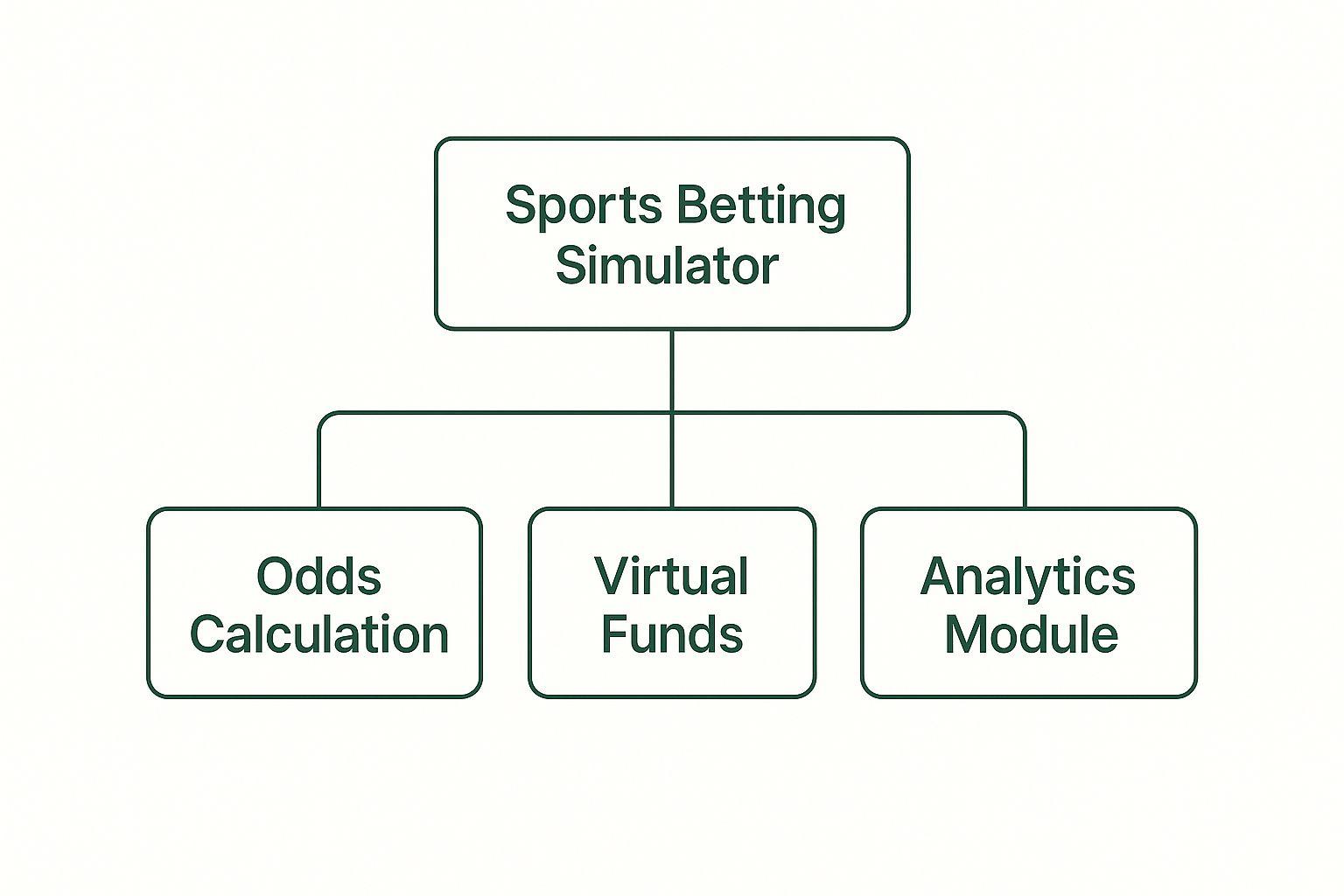
This infographic breaks down the key parts of a sports betting simulator: Odds Calculation, Virtual Funds, and the Analytics Module. Think of them as the engine, fuel, and dashboard of your virtual betting experience. The Odds Calculation engine mirrors the real-world fluctuations of odds, Virtual Funds allows you to manage a practice bankroll, and the Analytics Module provides valuable feedback on your performance. All these pieces work together to create a realistic betting environment.
Why Simulators Matter
This kind of virtual practice is becoming increasingly important in the world of sports betting. The virtual sports betting market is booming. Currently valued around USD 10.81 billion, it's projected to skyrocket to USD 45.1 billion by 2032, growing at a CAGR of 17.30% between 2025 and 2032. This growth highlights the increasing popularity and potential of virtual sports betting. You can learn more about this trend here. This shows how simulators are gaining recognition as valuable tools for learning and refining betting strategies. Think about it: Would you rather test a new Martingale system on a live game with real money at stake or in a simulator where you can see how it plays out over time without any risk?
The Power of Risk-Free Experimentation
One of the biggest benefits of sports betting simulators is the opportunity for risk-free experimentation. This is especially valuable for new bettors who are still getting their feet wet. They can explore different bet types, like over/under or point spreads, and experiment with various strategies without the worry of big losses. This helps build confidence and a deeper understanding of how sports betting works. It's like learning to ride a bike with training wheels – you can wobble and fall without getting seriously hurt. This freedom to experiment allows for a much faster learning curve.
Bridging the Gap Between Theory and Practice
Simulators also bridge the gap between theory and practice. Plenty of bettors read up on strategies and odds calculations but struggle to apply them in real-time. A simulator offers the ideal space to put these concepts into action. It also helps users better understand different sports and their specific betting markets. This hands-on experience is crucial for developing a consistent and potentially profitable betting strategy. This practice helps you develop the quick, informed decision-making skills that are essential for any successful bettor. Think of it like a musician practicing scales – the repetition leads to smoother performance during a live concert.
To help you choose the right simulator, here's a handy comparison table:
Types of Sports Betting Simulators Comparison
A comprehensive comparison of different simulator types, their features, and best use cases
| Simulator Type | Key Features | Best For | Learning Curve | Realism Level |
|---|---|---|---|---|
| Basic Spreadsheets | Simple odds calculations, manual data entry | Beginners learning basic concepts | Easy | Low |
| Statistical Models (e.g., Monte Carlo) | Probabilistic simulations, customizable parameters | Intermediate bettors testing strategies | Moderate | Medium |
| Advanced Software (e.g., Bet Labs) | Real-time data integration, complex algorithms, historical data analysis | Advanced bettors refining strategies, professionals | Steep | High |
| Virtual Sports Platforms | Simulated games with realistic graphics, in-play betting | Recreational bettors, casual practice | Easy | Medium |
This table highlights the different types of simulators available, ranging from basic spreadsheets to advanced software. Choose the one that best suits your skill level and learning goals.
Key takeaway: Simulators provide a valuable learning experience for bettors of all levels.
The Hidden Science Behind Virtual Sports Magic
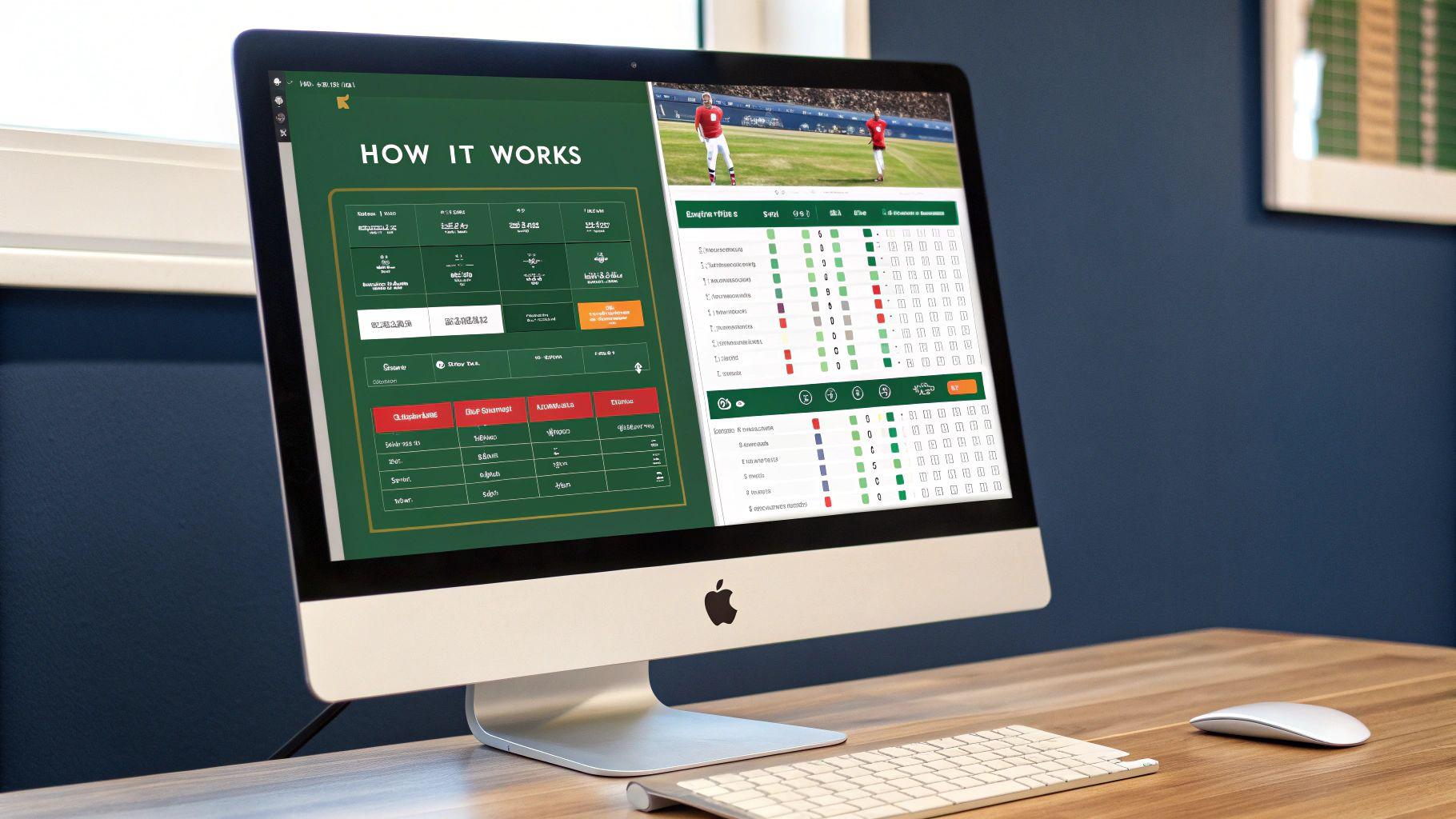
Ever wondered how a sports betting simulator can conjure up realistic game outcomes? It's a fascinating blend of technology, really. At the core of many simulators is the Random Number Generator (RNG). Imagine it as the digital equivalent of rolling dice, spitting out a sequence of unpredictable numbers. These numbers then influence everything from the result of a virtual coin flip to the final score of a simulated match.
But there's more to it than just random numbers. Artificial intelligence (AI) is playing an increasingly important role. AI algorithms sift through mountains of real-world sports data to create plausible game scenarios.
For example, picture a simulated basketball game. The AI might consider player stats, team form, and even past head-to-head records to influence how the virtual players perform. This data-driven approach makes the simulated games feel remarkably lifelike.
Unpacking the Algorithms: From RNG to AI
This increasing reliance on technology is fueling the boom in the virtual sports betting market. The RNG-based segment is the largest and also the fastest-growing part of the sector. This growth is driven by advancements in simulation technology, especially in RNG and AI-based simulations, creating more immersive and realistic experiences for users.
It's worth noting, however, that not all RNGs are equal. Some simulators use simpler RNGs, which can make results more predictable. That's where understanding the technology becomes a real advantage. Knowing how the simulator works can help you identify those with more advanced RNGs and AI, potentially giving you an edge in your practice sessions.
Statistical Modeling: Mirroring Real-World Dynamics
Beyond RNGs and AI, statistical modeling is another key piece of the puzzle. These models help shape how virtual athletes perform in different situations. Think of it this way: a statistical model for a virtual tennis player might factor in serve speed, first-serve percentage, and return rate.
Understanding how these models work can be incredibly valuable. For instance, imagine you discover a simulator tends to overemphasize home-field advantage in virtual football games. You can then adjust your betting strategies accordingly. By grasping the science behind the simulator, you can use it more effectively as a training tool. Recognizing these patterns helps you make more informed virtual bets, which can improve your performance when betting on real-world sports.
How Practice Transforms Into Profit

Sports betting simulators offer incredible value: they help turn practice into profit. It's not about magically knowing the future, but about developing a winning mindset and sharpening essential skills. Imagine learning poker. You wouldn't jump into a high-stakes game without practicing your bluffs and understanding hand rankings, would you? A simulator lets you test betting strategies without risking your actual money.
The Psychology of Risk-Free Experimentation
One of the biggest advantages of a simulator is risk-free experimentation. This takes away the emotional pressure that often clouds judgment in real betting. You can try out risky strategies like arbitrage betting or test complex systems without fear of losing your hard-earned cash. This freedom to make mistakes is essential for learning and refining your approach. It builds resilience and helps you understand what happens when theories meet the real world.
Simulators also provide a safe space for exploring new ideas. You might have a hunch about a team's performance or a specific betting market. But testing that hunch with real money can be intimidating. A simulator lets you play out these scenarios, validating or discarding your theories without any financial risk. This process sparks creativity and helps you identify promising strategies.
Building Skills Through Practice
Besides the psychological benefits, simulator practice builds tangible skills. Think about bankroll management, a crucial part of successful betting. In a simulator, you can practice allocating your virtual funds, setting limits, and sticking to a budget – all without touching your real money. This develops discipline and helps you avoid impulsive bets.
Simulators also improve your ability to analyze data and find profitable opportunities. You can experiment with different betting models and see how they perform in various market conditions. This strengthens your pattern recognition and decision-making. For a deeper dive into this topic, check out our guide on sports betting algorithms.
From Virtual Wins to Real-World Success
The confidence you gain through simulated wins and losses is invaluable. It prepares you for the emotional ups and downs of real betting, where both winning and losing streaks happen. This resilience is a key difference between successful and unsuccessful bettors. By managing your emotions in a simulated environment, you’re better prepared for the pressures of real betting.
To help illustrate how practice translates to improvement, let's look at some data:
Let's look at how time spent practicing in a simulator correlates with improvements in real-world betting:
Simulator Skills vs Real Betting Success Metrics
| Practice Hours | Strategy Retention | Emotional Control | Bankroll Management | Success Rate Improvement |
|---|---|---|---|---|
| 0-10 | Low | Low | Low | Minimal |
| 10-25 | Medium | Medium | Medium | 5-10% |
| 25-50 | High | High | Medium | 10-15% |
| 50+ | Very High | Very High | High | 15-20%+ |
This table shows a clear correlation between simulator practice and real-world betting improvement. As practice hours increase, so does strategy retention, emotional control, bankroll management skills, and ultimately, success rate.
Ultimately, simulator practice makes you a better decision-maker, not just someone who knows betting terms. It’s about understanding the nuances of different sports, mastering betting strategies, and developing the mental toughness to succeed. This well-rounded approach is what transforms practice into actual profit.
Choosing Your Perfect Training Ground
Picking the right sports betting simulator is crucial. Think of it like choosing the right gym. A well-equipped gym with knowledgeable trainers will get you results, while a dingy spot with broken equipment will leave you frustrated. This section helps you choose the simulator that fits your needs. We’ll look at the must-have features that separate the truly helpful tools from those that are all flash and no substance.
Essential Features vs. Marketing Hype
Some platforms boast impressive-sounding features, but don’t actually improve your betting skills. It’s like buying a car with a fancy sound system but a sputtering engine – it looks nice, but it won't get you where you need to go. Focus on these core elements instead:
Realistic Market Conditions: The simulator should mirror real-world odds movements and betting market behavior. Imagine training for a marathon on a treadmill that doesn’t incline – it won’t prepare you for the hills on race day. A simulator with unrealistic odds won’t prepare you for real-world betting either.
Variety of Betting Scenarios: Look for simulators that offer a range of sports, bet types, and league options. It’s like a chef learning only one recipe – they'll be lost if someone orders something else. A good simulator lets you experiment with different betting strategies.
Valuable Learning Resources: Some simulators offer tutorials, strategy guides, and performance analysis tools. Think of these as your personal betting mentor, providing feedback and helping you fine-tune your approach.
Free vs. Premium: Finding the Right Balance
Free sports betting simulators are great for beginners. They let you dip your toes in the water without any financial commitment. It’s like taking a test drive – you get a feel for the car before buying it. However, free versions often have limitations, like a limited number of betting options or restricted historical data.
Premium platforms usually offer more advanced features, like realistic market simulations, detailed analytics, and personalized training tools. These are essential for serious bettors who want to elevate their game. Think of it as upgrading to a professional-grade kitchen – the right tools can significantly improve your results.
Matching the Simulator to Your Goals
The "best" sports betting simulator doesn't exist. It's about finding the right one for you. Consider your learning style and goals. Are you a visual learner who thrives on interactive simulations? Or do you prefer diving into data and number crunching? Some simulators prioritize realistic game visuals, while others emphasize statistical analysis. It's like choosing between a hands-on cooking class and a textbook on culinary science.
Consider your specific betting interests, too. If you love football, find a simulator specializing in football betting markets. If you’re into horse racing, pick a platform with realistic horse racing simulations. This focused approach helps you hone your skills in your chosen area. Finding the right simulator is like finding the perfect tool for the job – it should fit your hand and accomplish your task efficiently.
Professional Training Methods That Actually Work
Think of practicing with a sports betting simulator like learning a musical instrument. Sure, playing random notes can be fun, but real mastery comes from consistent, focused practice. This section explores how to turn casual simulator use into a powerful tool for honing your betting skills. You might also be interested in learning more about professional sports betting.
Structured Practice: Building on Previous Sessions
Just like athletes follow training schedules, effective simulator practice needs structure. Create a plan with specific goals for each session. Instead of placing bets randomly, focus on particular aspects of your betting strategy. One day might be dedicated to practicing over/under bets in football, while the next focuses on moneyline bets in basketball. This focused approach will build expertise much faster than random practice.
Each session should build on the previous one. If you're working on identifying value bets, for instance, start with simple scenarios and gradually increase the complexity. This progressive learning allows you to solidify your foundation before tackling more challenging situations. It’s like building a house – you start with a solid foundation and gradually add layers.
Record Keeping: Tracking Meaningful Progress
Tracking your performance is essential. But don’t just focus on win/loss ratios. Track metrics like your average bet size, the types of bets you’re placing, and the specific market conditions you’re targeting. This data gives you valuable insights into your decision-making and reveals areas for improvement.
Develop a system for recording your simulated bets, including the reasons behind each decision. This helps you understand why certain bets were successful and why others weren’t. Think of this detailed record-keeping like a scientist's lab notebook – a documented history of your experiments and observations.
Objective Self-Analysis: Identifying Real Weaknesses
Honest self-assessment is vital for growth. After each practice session, review your performance data and pinpoint where you can improve. Don’t just focus on your losses. Even winning bets can reveal flaws in your strategy. Maybe you got lucky with a last-minute goal, or perhaps a bet was based on a gut feeling rather than solid analysis.
Be objective and avoid making excuses. It’s easy to blame bad luck, but successful bettors focus on what they can control – their own decision-making. This objective self-analysis is like a coach reviewing game footage – it helps identify weaknesses and refine strategy.
Advanced Techniques: Simulated Bankroll Management and Risk Assessment
As your skills grow, incorporate advanced techniques into your simulator practice. Simulated bankroll management is key. Practice setting a virtual budget and sticking to it. This helps you develop the discipline needed to manage your real money effectively.
Explore systematic risk assessment. A simulator lets you safely test high-risk strategies and learn to manage potential losses without risking your actual funds. This experience prepares you for the complexities of real-world betting.
By using these professional training methods, you’ll transform your simulator from a casual pastime into a powerful tool for skill development and long-term betting success. Dedicated practice is the key to making informed decisions and achieving your betting goals.
When The Sports World Stopped, Simulators Stepped Up

The COVID-19 pandemic threw a curveball at the sports world, and the ripple effects dramatically changed the sports betting scene. With live games put on hold, bettors started looking for other ways to get their fix. This created a surprising opening for sports betting simulators. Once a niche hobby, simulators suddenly became the main game in town for many. This unexpected surge in popularity revealed the potential of virtual sports betting and forever changed the industry.
This wasn't just a blip on the radar. The halt to live sports had a real impact. Simulations like FIFA and NBA2K became massively popular betting options. Esports betting exploded, growing 40 times larger, and revenues became seven times higher than before the pandemic. For a deeper dive into these numbers, check out these sports betting statistics.
From Side Show to Main Event
Before the pandemic, many people saw simulators as a bit of a gimmick. But when live sports disappeared, bettors had to rethink things. Millions of people discovered simulators, not out of choice, but out of necessity. They filled the gap left by postponed matches and canceled seasons. This shift introduced a much wider audience to the perks of virtual sports betting, like the chance to practice strategies and hone their skills without risking their money.
This period wasn't just a temporary patch. It fundamentally shifted how many view sports betting. What began as a stand-in became a valuable tool. The pandemic fast-tracked the use of simulator technology, bringing it from the fringes to center stage in the betting world.
Lessons Learned: Virtual Can Be Just as Engaging
The pandemic was like a giant, unplanned experiment. It demonstrated that virtual sports could be just as gripping as real-world games. The 24/7 availability of simulated matches, combined with the risk-free practice environment, proved very attractive to many.
This experience highlighted that the excitement of betting isn't only tied to real-life results. The strategic elements—the thinking, the analysis, the anticipation—involved in virtual sports betting can be equally thrilling. This realization has left a lasting mark on the industry, blurring the line between the virtual and the real.
A Lasting Impact: Simulators in a Post-Pandemic World
Even though live sports are back, many bettors are sticking with simulators. They’ve become a regular part of their betting routines, providing valuable training and testing grounds for new strategies. This continued interest proves the pandemic's lasting effect on the sports betting world.
The rise of simulators has also sparked innovation. Developers are building more advanced platforms with better features, more realistic graphics, and smarter AI. This constant evolution ensures that virtual sports betting remains a lively and evolving part of the larger betting ecosystem. The unexpected attention on simulators during the pandemic has changed how we think about "real" betting, showing how virtual platforms offer powerful advantages even alongside traditional sports.
Your Personal Training Program Blueprint
Success with sports betting simulators isn't about randomly clicking buttons. It's about structured practice, just like training for a marathon. You wouldn't just haphazardly jog around the neighborhood, would you? No, you'd follow a personalized training plan. Similarly, effective simulator training requires a systematic approach designed for your specific goals and level of experience.
Setting Measurable Milestones
First, define your objectives. What are you hoping to gain from using a simulator? Are you trying to master a particular betting strategy or improve your bankroll management? Write down concrete, measurable goals. For instance, instead of “get better at betting,” aim for something like “increase my win rate in simulated NBA games by 10% next month.” This gives you a clear target.
Next, break down your goals into smaller, manageable steps. Let's say you want to master Dutching. Don't try to learn everything at once. Begin by grasping the fundamental calculations, then practice applying Dutching to two-way markets, and gradually work your way up to more complex scenarios. This step-by-step progression helps build a solid foundation.
Designing Progressive Challenges
Your training program should challenge you, but not overwhelm you. Start with simpler simulations and gradually ramp up the complexity. If you’re practicing football betting, for example, begin with basic match outcomes. Once you're comfortable, move on to more nuanced markets like Asian handicaps or correct scores. Increasing the difficulty incrementally keeps you engaged and motivated.
Think of it like lifting weights. You wouldn't start with the heaviest weights on day one. You gradually increase the weight as you get stronger. The same principle applies to simulator training. As you improve, make the simulations more challenging to avoid hitting a plateau. Varying the sports and betting markets you practice can also keep things interesting and helps you develop a well-rounded skill set.
Feedback and Continuous Improvement
Regularly review your simulated betting performance and identify areas for improvement. Keep a detailed log of your simulated bets, noting the reasoning behind each decision. This can help you uncover patterns in your betting behavior and pinpoint weaknesses. A sports betting tracker can be helpful for documenting both your simulated and real bets – you might find our guide on sports betting trackers useful.
Don't just focus on wins and losses. Analyze the process behind your decisions. Did you adhere to your bankroll management plan? Did emotions cloud your judgment? Honest self-assessment is essential for growth. Use your simulator experience to refine your strategies and cultivate a disciplined approach.
Maintaining Motivation and Transitioning to Live Betting
Maintaining motivation is crucial, especially when you encounter inevitable plateaus. Celebrate your progress, no matter how small. Acknowledge how far you've come and remind yourself of your long-term goals. This positive reinforcement will help you stay focused and engaged.
Finally, when you feel confident in your simulator performance, start transitioning to live betting. Begin with small wagers and gradually increase your stakes as you gain real-world experience. Remember, the simulator is a training ground. The ultimate goal is to effectively apply your honed skills in live betting scenarios.
Building a personalized training program isn't one-size-fits-all. It takes self-awareness, discipline, and a commitment to continuous learning. But by following a structured approach, you can transform simulator practice into a powerful tool for achieving your betting goals.
Ready to elevate your betting game? Check out ValueBetFactory. Our advanced algorithms identify value bets and empower you to make informed betting decisions. Start your free trial today: ValueBetFactory