
Psychology of Gambling: The Hidden Forces Behind Every Bet
Unlock Profits with betting tips!
The Hidden Forces That Drive Your Gambling Decisions
Ever found yourself placing a bet and wondering, in hindsight, what you were thinking? The psychology behind gambling is a fascinating mix of cognitive biases, emotional triggers, and the way our brains are wired to respond to rewards. It's a journey into understanding not just why we gamble, but the subtle influences that shape our choices when money's on the table.
Our brains crave predictability and control. Think about a simple coin toss. Logically, it’s 50/50, but we often feel we can somehow sway the outcome. This "illusion of control" gets amplified in gambling, where near misses or small wins can trick us into believing we're cracking the code. This leads to the gambler's fallacy, the mistaken belief that past results influence future ones. It's like thinking a slot machine is "due" a payout just because it hasn't hit in a while.
Our emotions also play a huge part. The thrill of a potential win releases dopamine, our brain's "reward chemical." But dopamine is more about anticipation than the actual payoff. The rush comes from the possibility of winning, not necessarily the win itself. This sets up a powerful cycle, pushing us to keep gambling even when losses pile up. The near-miss effect, where we almost win, can trigger the same dopamine rush as a real win, further feeding the urge to play.
The gambling environment itself is another key factor. Casinos are carefully designed to stimulate our senses and encourage us to keep playing. Flashing lights, celebratory sounds, readily available alcohol, and the absence of natural light all contribute to an immersive experience. This atmosphere can distort our sense of time and money, making it easier to lose track of both.
Globally, the estimated proportion of people with gambling problems ranges from 0.4% to 2% depending on the survey. These figures often climb in environments with easy access to gambling, or within populations facing mental health challenges. For example, studies show individuals with psychiatric conditions are 17 times more likely to develop gambling issues than the general population. To explore the complex relationship between gambling and mental health, check out this article: How Gambling Affects the Brain. Ultimately, understanding these psychological factors is crucial for making informed choices about our gambling habits.
Your Brain On Gambling: The Science Behind The Rush
Imagine your brain as a sophisticated prediction machine, constantly working to identify rewards and avoid dangers. This system has been perfected over generations to help us navigate the complexities of survival. However, introduce the psychology of gambling, and this intricate system can start to malfunction. It’s like trying to run a vintage car on modern fuel – it wasn't built for the high-octane thrills and near misses of today's gambling environment.
The Dopamine Deception: It's About the Anticipation
Central to this neurological interplay is dopamine, often called the "reward chemical." But dopamine isn't really about the pleasure itself; it's more about the anticipation of pleasure. Think of that excited feeling just before you tear open a birthday gift, that tingling sense of expectation. That's dopamine doing its thing, creating a powerful sense of wanting and driving our motivation. Gambling cleverly taps into this anticipation, especially games designed for rapid play and near misses. Surprisingly, those frustrating moments when you almost win can trigger a dopamine release as powerful as an actual win, creating a compelling cycle that encourages continued play.
Hijacking the Reward System: From Survival to Slots
Our ancestors relied on this dopamine-driven reward system to find essential resources like food and shelter. The rush associated with finding these necessities was a crucial survival mechanism. Gambling, however, can hijack this ancient system. The flashing lights, captivating sounds, and the allure of a big win create a sensory overload, mimicking signals our brains interpret as vital for survival. This is the core of the psychology of gambling. Our brains are essentially tricked into believing that winning a jackpot is as important as finding food or securing safety.
Why Near Misses Matter: The Brain's Interpretation
Near misses add another layer of complexity to this neurological puzzle. Our brains, programmed to learn from mistakes, interpret a near miss not as a failure but as a sign of progress, a near success. This reinforces the illusion of control, the mistaken belief that we can somehow influence random outcomes. This is amplified by the variable reward schedules built into most gambling games. Wins are unpredictable but frequent enough to keep us engaged. This means our brains become conditioned to crave that next potential reward, even when faced with increasing losses. Understanding how our brains process these near misses is a critical step in recognizing the powerful psychological pull of gambling.
The Mental Traps That Keep You Coming Back
Your mind can be a tricky thing, especially when you're at the gambling table. It often takes shortcuts, falling into predictable traps—traps that the gambling industry knows all too well. These aren't random mental hiccups; they're deeply ingrained cognitive biases that affect how we understand probability and make decisions, particularly when money's on the line. Let's explore a few of the most common ones.
The Gambler's Fallacy: Misinterpreting Randomness
Have you ever felt like a slot machine was about to pay out because it hadn't in a while? That's the gambler's fallacy whispering in your ear. It's the mistaken belief that past events can influence future independent outcomes. Think of it like flipping a coin: getting heads ten times in a row doesn't make tails any more likely on the eleventh flip. Each flip is its own isolated 50/50 event. This fallacy can be a real problem, leading people to chase losses, thinking the next bet will magically "even things out."
Confirmation Bias: Remembering the Wins
We all have a tendency to remember our victories more vividly than our defeats. This is confirmation bias – we seek out and latch onto information that supports our existing beliefs. When it comes to gambling, this means we might overemphasize our wins while conveniently forgetting or downplaying our losses. This reinforces the idea that we're skilled or lucky, instead of acknowledging the role of pure chance. The result? A distorted view of our gambling performance, making us feel more confident than we perhaps should be.
Illusion of Control: Believing You Can Influence Chance
Even in games of pure chance like roulette or slots, many people feel a sense of control over the outcome. This illusion of control often stems from seemingly insignificant actions, like picking "lucky numbers" or believing in "hot streaks." But the truth is, these actions have no real impact on the results. This false sense of control can lead to increased risk-taking and an unwillingness to walk away, even when the losses start piling up. For those interested in understanding more about strategy in skill-based betting, check out this resource: learning more about strategies in sports betting.
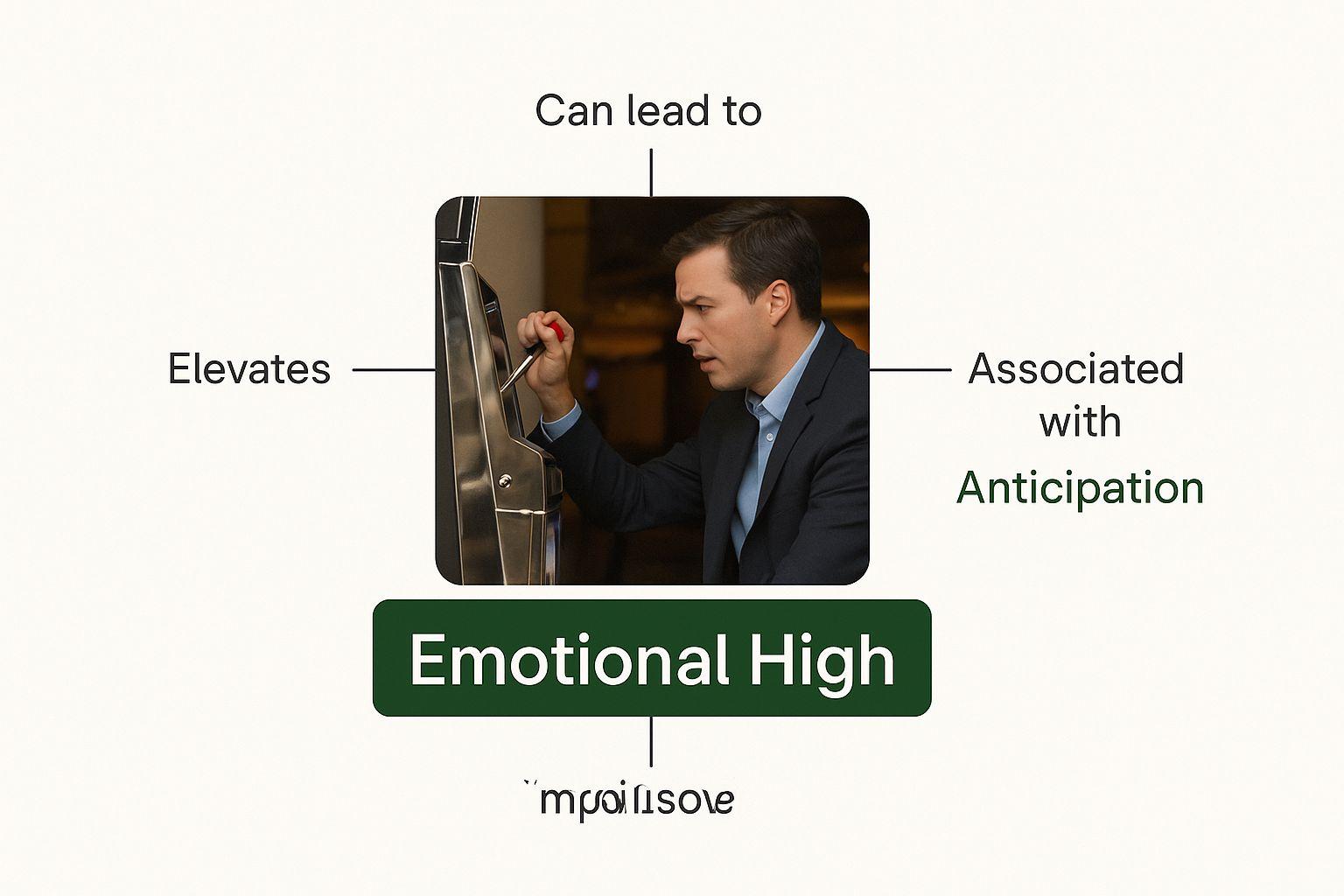
This infographic depicts the emotional rush a gambler experiences when pulling a slot machine lever. It visually highlights the powerful role emotions play in gambling. The thrill of anticipation and the potential for a reward, rather than the actual result, often drives gambling behavior. This emotional engagement can cloud our judgment, making it difficult to make rational decisions even when we know the odds.
Availability Bias: Overweighting Recent Events
Availability bias causes us to overestimate the likelihood of events that are easy to remember, usually because they happened recently or were emotionally charged. A big win, or even seeing someone else win big, can make winning seem more probable than it truly is, influencing our future betting decisions. This can lead to higher risk-taking based on a skewed perception of what's likely to happen. Understanding these cognitive biases is the first step toward navigating the psychology of gambling and making smarter choices.
To further illustrate these biases, let's look at a comparison table.
To understand the psychological mechanisms behind these biases and how they affect our gambling decisions, it's helpful to see them in action. The following table offers a detailed comparison.
| Bias Type | Description | Gambling Example | Psychological Impact |
|---|---|---|---|
| Gambler's Fallacy | The belief that past random events influence future ones. | Believing a slot machine is "due" for a payout after a series of losses. | Leads to chasing losses and escalating bets. |
| Confirmation Bias | Favoring information that confirms existing beliefs. | Remembering big wins vividly while forgetting or downplaying losses. | Creates an overly optimistic view of one's gambling abilities. |
| Illusion of Control | The belief that one can influence random events. | Choosing "lucky" lottery numbers or having rituals for slot machines. | Leads to overconfidence and increased risk-taking. |
| Availability Bias | Overestimating the likelihood of easily recalled events. | Witnessing a recent big win and believing it's more common than it is. | Influences future betting decisions based on skewed perceptions of probability. |
As this table shows, cognitive biases can significantly impact how we perceive risk and reward in gambling scenarios. Recognizing these biases in ourselves is crucial for developing a more rational and balanced approach to gambling.
The Global Reality: When Psychology Meets Crisis
The psychology of gambling isn't limited to the flashing lights of a casino or the digital glow of an online platform. It’s a truly global phenomenon, intricately woven into the cultural tapestry of societies worldwide. But how gambling problems appear and the impact they have can vary dramatically depending on where you are in the world, the types of games available, and how a society views risk and reward. Looking at this through a cross-cultural lens offers a fascinating glimpse into human behavior and the complex dance between individual psychology and the structures of society.
Cultural Attitudes and Gambling Norms
Imagine two different communities. In one, gambling is a casual social activity, a bit of fun enjoyed with friends and family. In the other, it's seen as a vice, a dangerous path to moral ruin. These ingrained beliefs have a powerful influence on how people within those communities view gambling and their likelihood of developing problematic habits.
In cultures where gambling is a regular part of social traditions, people might be exposed to it from a young age, potentially making risky behavior seem normal. On the other hand, societies with stricter regulations and negative views on gambling might have lower rates of problem gambling, but that doesn't mean the issue vanishes completely. These contrasting cultural attitudes emphasize the importance of examining the psychology of gambling within its specific social setting.
Prevalence Rates Around the World: A Stark Reality
These cultural differences show up starkly in the wide range of gambling addiction rates around the world. Gambling addiction is a significant global issue, affecting between 1.2% and 6.0% of the population, depending on the country and its unique gambling culture.
For example, Latvia currently reports the highest prevalence, with 6.0% of its population grappling with gambling problems. While China might have a lower percentage, around 4%, the sheer size of its population means it has the largest absolute number of gambling addicts—nearly 60 million people. This dramatic difference highlights how environmental factors can either act as a buffer against or amplify gambling-related harm. You can find more information on the prevalence of gambling addiction here: How Common Is Gambling Addiction?
To further illustrate this global variation, let's look at some specific data:
To better visualize these global trends, take a look at the table below:
Global Gambling Problem Prevalence by Country
Statistical breakdown of gambling addiction rates across different countries, showing how cultural and regulatory factors influence problem gambling
| Country | Prevalence Rate | Estimated Population Affected | Cultural Factors |
|---|---|---|---|
| Latvia | 6.0% | ~114,000 | Integrated into social activities; readily available online gambling |
| China | 4.0% | ~60,000,000 | Large underground gambling market; cultural acceptance of some forms of gambling |
| Australia | 1.85% | ~460,000 | Normalized sports betting culture; high accessibility of gambling venues |
| United Kingdom | 0.8% | ~536,000 | Long history of gambling; robust online gambling presence |
| United States | 1.2% | ~3,800,000 | Varied state regulations; cultural acceptance of casino gambling |
This table offers a snapshot of how gambling addiction varies across the globe. The cultural context, coupled with regulatory approaches, contributes to the observed differences in prevalence rates.
Regulatory Approaches and Their Impact
Government regulations also play a key role in shaping gambling behavior. Countries with tighter controls, like limits on advertising and the availability of gambling venues, often report fewer gambling problems. Conversely, in places with looser regulations and easy access to gambling, especially online, gambling-related issues can spike.
However, even the strictest regulations can’t completely erase the psychological vulnerabilities that gambling can prey on. This underscores the need for a more comprehensive strategy, one that addresses both the individual's psychology and the larger societal context. Examining different approaches to regulating gambling offers valuable insights into how various societies try to manage the psychological risks inherent in this activity.
Ultimately, the global picture of gambling paints a complex scene. It's a fascinating interplay between individual psychology, cultural influences, and the structures of society, highlighting our universal human tendency to engage in risk-taking behavior while demonstrating how cultural and regulatory environments can significantly influence the outcomes of these behaviors.
The Emotional Rollercoaster: When Feelings Take Control
Let's be honest, gambling isn't just about cold, hard logic and carefully calculated risks. A huge part of the experience, and often the most powerful, is our emotional response. Really grasping this emotional landscape is key to staying in control and making smart decisions. This isn’t about ignoring our feelings, it’s about understanding their influence.
Mood-Dependent Gambling: Emotions as Triggers
Our emotional state plays a surprisingly big role in how we gamble. Think about it: stress at work, boredom on a Sunday afternoon, or even the excitement of a recent win can all trigger the urge to gamble. This is mood-dependent gambling, where feelings become linked to the act of gambling, creating a powerful association. For example, someone feeling anxious might see gambling as a distraction, while someone celebrating a big win might feel invincible and place a much larger bet than usual.
These emotional states become powerful cues.
The Thrill of the Win: Overriding Logic
Anticipating a win – that rush of possibility – can be intoxicating. The potential for a big payout, even when slim, can easily override rational thought. This emotional high, fueled by the brain's reward system and a surge of dopamine, creates a strong urge to keep playing. It’s a fundamental part of why gambling can be so compelling, and recognizing this dynamic is a huge step towards responsible gambling.
Chasing Losses: The Desperation Trap
One of the most dangerous emotional pitfalls of gambling is the desperate attempt to recover losses. The frustration and even shame of losing can lead us down a path of impulsive bets, trying to "win it back" – a strategy almost guaranteed to backfire. This sets up a vicious cycle where emotional distress leads to more gambling, often resulting in even bigger losses. This pattern is a common trap, and understanding it is crucial for breaking free.
The Emotional Spectrum of Gambling: From Excitement to Despair
Gambling isn’t a one-note experience; it's a whole spectrum of emotions. The initial excitement can quickly swing to frustration, disappointment, and even despair as losses mount. These feelings become tangled up with our gambling habits, creating patterns that feel automatic, even though they are learned responses. For instance, the initial excitement of placing a bet can be a trigger, but the frustration of a loss can also become associated with gambling, leading to a complex web of emotional cues.
Understanding the psychology of gambling, especially the emotional side, isn't about suppressing feelings. It's about building self-awareness. When we recognize our emotions are driving our decisions, we can make more conscious choices about our gambling. It’s about taking back the reins and creating a healthier relationship with risk.
When Psychology Becomes Pathology: The Addiction Connection
Have you ever wondered how someone goes from enjoying the occasional lottery ticket to struggling with a serious gambling problem? It's rarely a sudden, dramatic shift. Instead, it's often a gradual, almost imperceptible slide – a subtle change in the psychology of gambling that can be difficult to spot. It's more complex than simply moving from friendly poker games to maxing out credit cards at the casino. We're talking about a complicated interplay of factors that’s often linked to broader mental health issues, where gambling can be both a symptom and a contributing factor to underlying psychological pain.
Vulnerability Factors: Personality, Experiences, and Trauma
Some people are simply more vulnerable to developing a gambling addiction than others. Certain personality traits, like impulsivity, a thirst for sensation-seeking, or difficulty regulating emotions, can make the immediate gratification and thrill of gambling especially appealing. Think of it like a moth drawn to a flame – the allure is almost irresistible.
Past traumas, especially those experienced during childhood, can also significantly influence someone’s relationship with gambling. For some, gambling can become a maladaptive coping mechanism, a way to numb emotional pain or momentarily escape difficult memories. It becomes a temporary bandage on a much deeper wound.
The Mask of Addiction: Hiding Deeper Issues
Problem gambling often serves as a mask, concealing deeper psychological issues. Depression, anxiety, and even post-traumatic stress disorder (PTSD) can frequently co-occur with gambling addiction. This creates a complex web of interconnected challenges, making it even harder to unravel the underlying causes.
The act of gambling can provide temporary relief from these underlying issues, offering a fleeting sense of control or a brief respite from intrusive thoughts. This makes it even more challenging to address the root causes of the addiction, as the gambling itself becomes a way of avoiding the deeper pain. It's a vicious cycle. The psychological impact of gambling addiction is profound, and it's often intertwined with other mental health conditions. Research shows that nearly 75% of individuals with gambling problems also experience depression, and about 38% struggle with co-occurring alcohol problems. Furthermore, between 12.5% and 29% of problem gamblers exhibit symptoms associated with post-traumatic stress disorder (PTSD). These statistics paint a stark picture of the interconnectedness of these issues. You can explore these findings in more detail here.
Shame and Secrecy: Perpetuating the Cycle
The shame and secrecy that often surround gambling addiction only serve to perpetuate the cycle of destructive behavior. People struggling with gambling problems often hide their activities from loved ones, fearing judgment or rejection. This secrecy prevents them from seeking help and creates a profound sense of isolation, further exacerbating the underlying psychological distress. The fear of exposure and the accompanying social stigma can be paralyzing, trapping individuals in a downward spiral.
Hope and Recovery: Addressing the Whole Person
The good news is that understanding these complex psychological connections is the first step towards effective treatment and recovery. Approaches that address the whole person—not just the gambling behavior itself—are essential for lasting change. Therapy, support groups, and even medication can help individuals address underlying mental health conditions, develop healthier coping mechanisms, and break free from the grip of gambling addiction.
If you're interested in exploring the psychology behind successful sports betting strategies (separate from addiction), you might find this resource helpful: Professional Sports Betting: Strategies and Insights. Remember, recovery is about more than just stopping the gambling; it's about healing the underlying wounds and building a fulfilling life free from addiction.
Taking Back Control: Practical Psychology For Healthier Choices
Knowledge is power, especially when it comes to understanding our own minds and how they influence our gambling habits. Having explored the psychological factors at play, let's shift gears and discuss how to cultivate a healthier relationship with gambling. This might mean establishing stronger boundaries, recognizing those early warning signs, or even deciding to abstain completely. The key takeaway here isn't about sheer willpower; it’s about leveraging psychological insights to your advantage.
Mindfulness: Interrupting the Cycle
Imagine mindfulness as a pause button for those automatic reactions. When the urge to gamble arises, instead of immediately giving in, try simply observing the feeling without judgment. Notice the physical sensations, the thoughts swirling around, and the emotions tied to the urge. This simple act creates a valuable space between the urge and your response, allowing for a more conscious decision.
For example, if you feel drawn to gamble after a tough day at work, stop and take a few deep breaths. Ask yourself a crucial question: "Is this urge rooted in genuine enjoyment, or am I trying to escape discomfort?"
Cognitive Strategies: Challenging Distorted Thinking
Gambling environments, both online and in casinos, can often skew our thinking. One example is the gambler's fallacy, which tricks us into believing a win is "due" after a string of losses. To combat this, actively challenge these distorted thoughts.
Remind yourself that each bet is independent – like flipping a coin – and previous results have zero influence on future outcomes. Also, recognize the illusion of control: you can't magically influence random events like the roll of dice or the spin of a roulette wheel. By challenging these distortions, you gain perspective and weaken their hold on your behavior.
Managing Triggers: Before They Become Urges
Identifying your personal gambling triggers is crucial. These might be specific emotions (like stress or boredom), locations (like passing a casino), or even times of day. Once you're aware of these triggers, develop strategies to manage them before they morph into uncontrollable urges.
This might involve avoiding certain environments, finding alternative activities to replace gambling (like going for a walk or reading a book), or seeking support from a friend or therapist. If stress is a trigger, explore healthy coping mechanisms like exercise, meditation, or spending time outdoors. If you're interested in more strategic betting within reasonable limits, you might find this article helpful: Check out our guide on betting for value. The overall aim is to proactively manage your environment and emotional state to minimize exposure to those tempting situations.
Learning From Success Stories: Inspiration and Practical Tips
Hearing stories from people who have successfully managed their own gambling challenges can be incredibly powerful. These stories can offer valuable insights, practical tips, and, perhaps most importantly, hope. Their experiences can normalize the struggles you might be facing, proving that positive change is within reach.
By incorporating these strategies, you can begin to transform your relationship with gambling from one of automatic reaction to one of conscious choice. It's about building sustainable habits that are in line with your values and goals, whether that means gambling more mindfully or choosing to walk away entirely. Sign up for ValueBetFactory today at ValueBetFactory and start making more informed betting decisions.