
Closing Line Value Mastery: Your Complete Betting Edge Guide
Unlock Profits with betting tips!
Understanding What Makes Closing Line Value So Powerful
Closing Line Value (CLV) is a crucial concept in sports betting, essential for long-term profitability. It's a key differentiator between strategic bettors and those relying on luck. Instead of focusing solely on wins and losses, experienced bettors prioritize getting the best possible price for every wager. This value-driven approach is where CLV becomes essential.
What exactly is CLV? It's the difference between the odds you secured your bet at and the closing line odds—the final odds offered just before the event begins. A positive CLV means you got a better price than what was ultimately available, indicating you outperformed the market. A negative CLV means you bet at worse odds than the closing line. This understanding shifts the focus from simply winning bets to winning smartly.
The Power of Positive CLV
Consistently achieving positive CLV is vital for long-term success in sports betting. It’s about maximizing your return on every wager, ensuring that even if you don’t win every bet, you’re positioned for profitability over time. This is because, across a large sample size, consistently beating the closing line strongly correlates with profitability.
The following infographic visualizes the impact of CLV on win rates and average odds shifts:
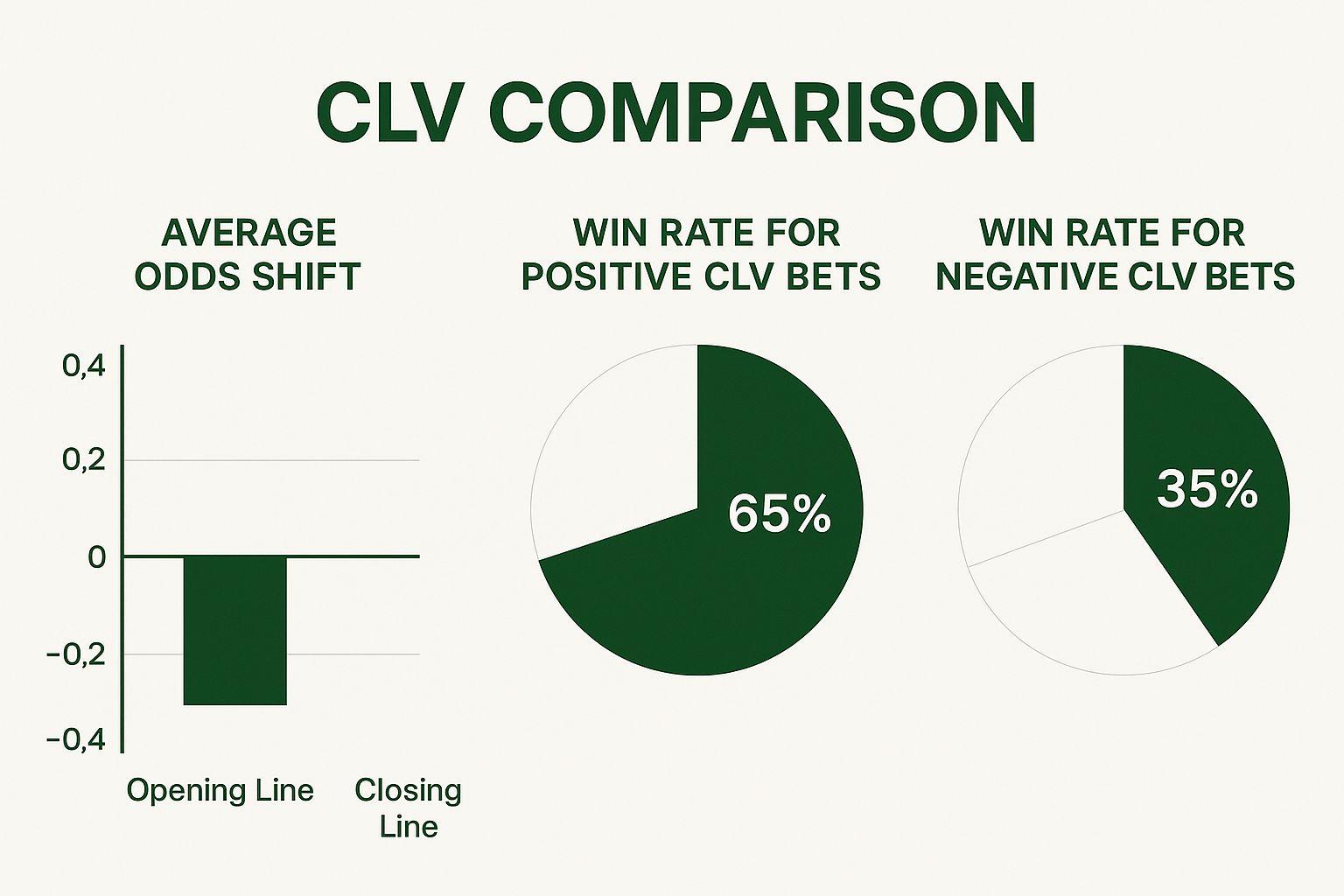
As the infographic shows, bets with positive CLV tend to have significantly higher win rates than those with negative CLV, even if the initial win percentages appear similar. This underscores the importance of getting the best possible odds. The infographic also highlights the dynamic nature of betting markets by showing the average shift in odds from opening to closing.
Historically, CLV has been a key factor distinguishing professional bettors from recreational ones. Research shows that professional bettors and syndicates consistently achieving positive CLV over large sample sizes almost always profit. They identify market inefficiencies before they're corrected, placing bets at better odds than the final closing line. For example, if a line moves from -3 to -4 in favor of the favorite and you bet at -3, your bet has positive CLV. Learn more about finding closing line value.
Why CLV Matters More Than Your Win-Loss Record
While winning is the goal, focusing solely on your win-loss record can be misleading. A bettor might have a winning record short-term but consistently secure negative CLV, leading to long-term losses. Conversely, a bettor could experience a losing streak but maintain positive CLV, indicating a sound betting process.
The following table provides examples of positive and negative CLV scenarios:
"Positive vs Negative Closing Line Value Examples" Comparison showing examples of positive and negative CLV scenarios across different sports
| Sport | Your Bet | Opening Line | Closing Line | CLV Result | Profit Indicator |
|---|---|---|---|---|---|
| NFL | Team A -3 | -3 | -4 | Positive | Potentially More Profitable |
| NBA | Team B +4 | +4 | +3 | Positive | Potentially More Profitable |
| MLB | Team C -1.5 | -1.5 | -1 | Negative | Potentially Less Profitable |
| NHL | Team D +2.5 | +2.5 | +3 | Negative | Potentially Less Profitable |
This table highlights how the closing line movement can impact potential profitability. Even if your bet wins, negative CLV means you could have made more profit if you'd bet at the closing line. Conversely, positive CLV can cushion losses or boost winnings. Therefore, CLV offers a more accurate measure of your betting skill.
Reading Line Movement Patterns Like A Professional
Understanding closing line value (CLV) is only half the battle. The real skill lies in interpreting line movement to anticipate the closing line. This predictive ability transforms you from a reactive bettor into a proactive value hunter. It's like anticipating traffic flow – you're already on the clear route, avoiding the congestion.
Identifying Sharp Money vs. Public Influence
Not all line movement is created equal. Sometimes, a line shifts due to heavy public betting, often driven by emotion or bias. This creates artificial line movement, not reflecting true outcome probabilities.
Other times, sharp money drives line movement. These are bets placed by professional bettors with proven success. They are experts at identifying mispriced lines, and their actions often foreshadow true value.
For example, a popular underdog attracts significant public bets, pushing the line in their favor. However, sharp bettors might recognize the underdog is overvalued and hold back. This discrepancy between public perception and sharp analysis creates opportunities for positive CLV.
Steam Moves and Reverse Line Movement
Two key patterns to watch for are steam moves and reverse line movement. Steam moves are rapid, dramatic line shifts, often due to a sudden influx of sharp money. This swift action suggests informed bettors have identified a significant edge.
Reverse line movement, conversely, occurs when a line moves against public betting trends. This can indicate sharp bettors are taking the opposite side, creating value on the less popular option.
Observing these patterns provides crucial insights into market perception. Similar to the stock market – sudden spikes or unexpected dips reveal information about future performance – steam moves and reverse line movement can indicate hidden value in sporting events.
Sport-Specific Line Movement
Each sport has unique line movement characteristics. NFL lines tend to move more significantly throughout the week as news and injuries emerge. NBA totals might be influenced by late-breaking player availability. Understanding these sport-specific nuances is crucial for accurate CLV prediction.
Additionally, certain teams consistently exhibit predictable line movement due to public perception or coaching tendencies. A key statistical aspect of CLV is its relationship to line movement trends. Historical line data provides insights into market trends, helping bettors make smarter decisions.

Tracking opening and closing lines across various sports reveals how odds shift based on betting activity. Platforms like BettorEdge offer analytics tools to access and analyze historical line movements, focusing on metrics like peak variations and the timing of shifts. This data helps identify patterns in specific teams or markets, enabling bettors to capitalize on these trends and secure better odds. Understanding these trends increases the chances of beating the closing line and achieving positive CLV. Discover more insights about historical line movement trends.
External Factors
Finally, external factors like weather, injuries, and news significantly impact line movement. A sudden downpour can drastically affect a baseball game's total, while a key injury can shift an NFL line by multiple points.
Staying informed and understanding how these external forces impact market reactions is essential for predicting CLV and making well-timed wagers. This allows you to capitalize on opportunities before market adjustments. Combining your knowledge of these factors with sharp money indicators will significantly improve your ability to predict closing lines and secure the best possible odds.
Battle-Tested Strategies For Beating Closing Lines

Knowing how to interpret line movements is essential for sports betting success. But truly excelling requires beating the closing line. This means consistently getting better odds than the final price available before an event begins. This section explores the tactics used by seasoned bettors to achieve this.
Timing Is Everything: Early Vs. Late Betting
Timing is crucial for maximizing closing line value (CLV). Early-week NFL spreads can be a goldmine. The market often hasn't fully adjusted to new information. Waiting until game day, however, could mean missing the best odds.
But this isn't a hard and fast rule. Same-day NBA player props, for example, can offer valuable opportunities as late-breaking news about player availability surfaces. Understanding the unique timing of each sport and bet type is key.
Identifying Inefficient Markets
Some betting markets are more prone to inefficiencies than others. This means more chances for positive CLV. Lesser-known leagues or niche markets may not attract as much attention from sharp bettors, creating exploitable opportunities.
Finding these inefficient markets is like discovering hidden value. It takes more research, but the potential payoff can be substantial. This often means exploring less popular betting options.
Sharp Money Vs. Public Steam: Know The Difference
Distinguishing between sharp money and public steam is vital. Sharp money comes from informed bettors. Following these bets often indicates true value. Chasing public steam, however, can lead to betting on overpriced outcomes.
Imagine a team experiences a surge in public betting (steam) after an upset win. The line might move too far in their favor. Sharp bettors would recognize this overreaction and bet against the inflated line, generating positive CLV. Professional bettors focusing on CLV typically achieve positive CLV on 55-65% of their bets. The most successful syndicates reach 70%+ positive CLV rates through sophisticated timing and market analysis. Find more detailed statistics here.
Advanced Techniques for CLV Mastery
Several advanced techniques can boost your CLV:
- Line Shopping Timing: Compare odds across different sportsbooks at various times to find the best price. Sportsbooks are where you place your bets.
- Recognizing Market Maker Vulnerability: Understand when market makers are most likely to offer favorable odds. This can happen when they're adjusting to unexpected news or heavy one-sided action.
- Predictive Line Movement: Anticipate future line movement to position yourself ahead of the curve and secure better odds. Read also: How to master positive EV betting.
By mastering these techniques, you become a proactive value hunter. You're strategically targeting market inefficiencies, not just betting on outcomes. This proactive approach, combined with an understanding of line movement, is the key to consistently beating the closing line and achieving long-term profitability.
Essential Tools That Give You The Closing Line Edge
Understanding Closing Line Value (CLV) is a good start, but it's not enough to consistently win. To truly capitalize on CLV, you need the right tools. These tools help track line movements, calculate CLV, and pinpoint profitable betting opportunities. They are essential for any serious bettor looking to improve their returns.
Software and Platforms for CLV Tracking
There's a wide range of software and platforms available, from free resources to premium subscriptions, each offering a different set of features. Choosing the right one depends on your budget and your betting style.
Premium Platforms: These platforms are your all-in-one solution. They offer features like real-time odds tracking, automated alerts for favorable line shifts, historical data analysis, and advanced CLV calculation tools. They give you a comprehensive view of the market.
Free Alternatives: If you're on a budget, free resources like odds comparison websites and basic spreadsheet tracking can still be valuable. While they may not offer the same level of automation or in-depth analysis as premium platforms, they can still provide a solid foundation for tracking CLV.
Studies show that bettors using dedicated CLV tracking tools improve their performance by an average of 23% within the first three months. Automated alerts help capture 40% more profitable opportunities.
Setting Up Your Tracking System
Once you've chosen your tools, setting up a well-structured tracking system is crucial for success.
Automated Alerts: Configure alerts for significant line movements to ensure you don't miss valuable opportunities. These alerts act as your personal notification system, keeping you informed of key changes in the market.
Historical Data Integration: Integrating historical data allows you to spot patterns and make more informed predictions. Past performance can be a valuable indicator of future outcomes.
Customizable Metrics: Track the metrics that align with your betting strategy. Focus on the data points that directly influence your CLV performance.
Metrics That Matter for CLV Analysis
Effective CLV analysis involves more than just monitoring line movement. Understanding key metrics is essential for interpreting the data and making informed decisions.
Opening Line vs. Closing Line: Comparing these lines reveals market sentiment shifts and helps assess the value of your early bets.
CLV Percentage: This metric quantifies your edge over the closing line, providing a clear performance indicator. Check out this resource on How to master no-vig odds.
Bet Timing: Tracking bet timing relative to the closing line can help optimize your strategy for different sports and markets.
Interpreting Data for Better Decisions
Having the data is only half the battle; knowing how to interpret it is where you gain a real advantage.
Identifying Trends: Look for recurring patterns in line movement to anticipate future shifts. This can help you predict market behavior.
Market Efficiency: Assess how efficiently markets react to information. This can help uncover mispriced odds.
Long-Term Tracking: Focus on CLV performance over the long term. Short-term fluctuations can be misleading. Consistent positive CLV is the true measure of success.
By combining the right tools with a solid understanding of CLV principles, you can significantly improve your betting approach and gain a substantial edge.
Critical Mistakes That Kill Your Closing Line Value
Even with a firm understanding of closing line value (CLV), it's easy to fall prey to common mistakes that prevent bettors from maximizing its potential. These errors can undermine even the most well-researched strategies. Let's explore some of these pitfalls and how to avoid them.
The Perils of Poor Timing
Perhaps the most damaging mistake is mistiming your bets. Betting too late, particularly within two hours of game time, often results in negative CLV. The market tends to be most efficient right before an event begins, leaving little room for advantageous odds. It's similar to buying concert tickets right before the show – you'll likely pay a premium.
Conversely, betting early, especially in markets like early-week NFL spreads, can offer significantly better opportunities. Research on recreational bettors reveals that timing mistakes account for 67% of negative CLV outcomes. Late betting results in an average -4.2% CLV, while early betting averages +2.1% CLV. You can learn more about this in a study on betting timing mistakes.
Another frequent timing error is chasing line movement. This involves betting on a team after the line has moved significantly in their favor, often due to sharp bettors. By the time the average bettor reacts, the value is typically gone.
Emotional Betting and Overreactions
Emotions can be a significant detriment to CLV. Betting based on gut feelings or team loyalty rather than reasoned analysis often leads to poor value. Overreacting to breaking news is another common trap.
While staying informed is important, impulsive reactions to every news item can lead to chasing unfavorable lines. Much like the stock market, knee-jerk reactions to short-term changes rarely lead to long-term success.
Bankroll Management and Bet Sizing
Poor bankroll management can sabotage even the most promising CLV strategies. Overbetting, even on positive CLV wagers, exposes you to substantial losses. It’s like having a winning hand in poker but betting your entire stack – one loss can wipe you out. Long-term success requires disciplined bet sizing.
The CLV Trap: Focusing on One Metric Alone
Finally, focusing solely on CLV while ignoring other crucial factors like market selection and bet sizing is a recipe for disappointment. CLV is a powerful tool, but it’s not the only factor to consider. It's like judging a car solely on its fuel efficiency – other factors like safety and reliability are equally important.
Building Discipline for Long-Term Success
Avoiding these critical mistakes requires discipline and a long-term approach. Prioritizing smart timing, managing emotions, and implementing sound bankroll strategies, along with considering the bigger picture of your bets, will help you unlock the true potential of closing line value. This builds a foundation for consistent betting profits. Focus on making informed, calculated decisions, not chasing quick wins. This measured approach protects and enhances your closing line value over time, much like a strong foundation supports a building.
Building Sustainable Profits Through Closing Line Value
Closing line value (CLV) is more than just a number; it's the foundation of long-term profitability in sports betting. Understanding how to use CLV effectively is like having a personal betting advisor, guiding you towards consistent returns. This involves tracking, benchmarking, and refining your approach based on your CLV performance.
Tracking CLV Performance Over Meaningful Sample Sizes
Tracking your CLV isn't about focusing on individual wins or losses. It's about analyzing performance across a meaningful sample size of bets. Think of it like evaluating a baseball player's batting average. A few good games don't define a successful player. A larger sample size paints a more accurate picture of your true betting skill.
Tracking just 10 bets provides limited insight. Analyzing 100, or even 1,000+ bets, reveals patterns and trends in your CLV. This broader perspective helps pinpoint areas for improvement and reinforces your strengths, making your CLV a more reliable indicator of your true betting edge.
Setting Realistic Benchmarks and Refining Your Strategy
With a substantial sample size, set realistic benchmarks for improvement. Don't expect immediate success. Focus on gradual, sustainable progress. If your CLV is consistently negative, aim for a small positive CLV to start. As your strategy improves, gradually increase your benchmarks.
This process resembles training for a marathon. You gradually increase your distance and pace over time. Your CLV benchmarks should follow a similar progression. This data-driven approach allows for continuous refinement. Identify bet types, markets, or sports contributing most to your positive CLV and concentrate on those. Minimize or eliminate bets consistently generating negative CLV.
The Relationship Between CLV and Profit: Long-Term Vision
Understanding the connection between positive CLV and profit margins is critical. Consistently beating the closing line means, on average, you're securing better odds than the market deems fair. This directly translates to higher expected value and increased long-term profits. Bettors maintaining positive CLV over 1,000+ bet samples have a 94% probability of long-term profits, with average ROI between 3-8% depending on the sport and market. Explore this further here.
Remember, short-term results can be deceptive. Even with a positive CLV, losing streaks are inevitable. This is the nature of probability. During these times, maintain confidence and discipline, using your positive CLV as reassurance. Trusting your process, even during losses, is essential.
Advanced Concepts and Scaling Your Betting
As you become more proficient with CLV, explore advanced concepts. Analyze CLV across different market types and understand its variance across different sports. Consider scaling your betting operation while preserving your profitable edge.
This could involve using technology and automation to track more markets or exploring new strategies aligned with your CLV approach. Scaling effectively requires maintaining the core values and processes that drove initial success, while adapting to new challenges and opportunities.
Ready to maximize closing line value and transform your betting profits? ValueBetFactory provides the tools, resources, and educational materials you need. From real-time alerts to comprehensive CLV tracking, ValueBetFactory empowers both novice and experienced bettors. Visit ValueBetFactory today and begin your journey towards consistent betting success.