
Avoid Bookmaker Limitation With Proven Strategies
Unlock Profits with betting tips!

To get a handle on avoiding bookmaker limits, you first have to understand why a bookmaker brings the hammer down in the first place. It’s not personal; it’s just business. Bookmakers are risk-management companies, and their entire model is built around catering to losing, recreational players.
If you're someone who consistently finds value and beats them long-term, you're not a customer, you're a financial liability. That's when the stake restrictions and account closures start rolling in.
Why Bookmakers Limit Accounts And What To Look For
It’s easy to feel singled out when a bookie slaps limits on your account, but their decision is purely algorithmic. Their business lives and dies by maintaining a profitable margin over a massive volume of casual bettors. Think of it like a casino; they don't mind the occasional big winner because it's great marketing, but they can't afford to let anyone consistently beat the house.
And this model is booming. The global sports betting market was valued at over $100 billion in 2024 and is projected to hit a staggering $187.39 billion by 2030. All that growth means more bettors are in the market, making it even more vital to know how to keep your accounts healthy. We cover the nuts and bolts in our detailed guide on how bookmakers make money, but the main takeaway is simple: they want predictable customers.
The Anatomy Of A Flagged Account
So, what makes a bettor stick out like a sore thumb? Bookmakers use sophisticated software that monitors every single click you make. This software is designed to profile you, categorizing your account based on its perceived threat level.
A few key behaviors will set off alarm bells almost instantly:
- Beating the Closing Line: This is the big one. If you consistently place bets at odds that are better than what's available right before an event starts (the "closing line"), you're screaming "sharp bettor." It's arguably the most important metric they track.
- Arbitrage or Value Betting: Their systems are designed to spot patterns. If your wagers consistently exploit price differences between bookies or find "value" where their odds are mathematically soft, you'll get flagged.
- Unusual Market Selection: The average punter bets on the Premier League or the NFL. An account that only bets on obscure markets, like Lithuanian basketball or third-tier Finnish football, looks like a specialist hunting for weak lines.
Key Takeaway: Bookmaker limitations have nothing to do with winning or losing a single bet. It's all about whether your overall betting pattern suggests you have a long-term, profitable edge over them.
Common Triggers For Bookmaker Account Limitation
To keep your accounts in good standing, you need to know what a bookmaker's risk management team is looking for. The table below breaks down the most common behaviors that get accounts flagged, reviewed, and ultimately limited. Think of this as a checklist for spotting your own risky habits.
| Behavior | Why It's a Red Flag | Severity Level (Low/Medium/High) |
|---|---|---|
| Consistently Beating Closing Odds | Shows you're finding value before the market corrects. The #1 sign of a sharp. | High |
| Betting on Obscure Markets | Suggests you're a specialist exploiting less efficient, easier-to-beat lines. | High |
| Arbitrage Betting | Directly exploits pricing errors for guaranteed profit, which is a direct loss for them. | High |
| Using Maximum Stakes | Casual bettors rarely hit the max limit. Doing so suggests you're confident in a major edge. | Medium |
| Only Betting on Promotions | Shows you're a "bonus hunter" only playing when the odds are tipped in your favor. | Medium |
| Making Large, Erratic Deposits | Unusual financial activity can trigger automated fraud or risk reviews. | Low |
| Quick Withdrawals After Wins | Recreational players often let winnings sit. Frequent withdrawals can signal a pro. | Low |
Recognizing these triggers is the first step toward blending in. By understanding what the bookies are watching for, you can start making smarter decisions to prolong the life of your accounts and protect your ability to find value.
Early Warning Signs Your Account Is Under Review
Before the hammer falls and your stakes are slashed to pennies, there are often subtle clues that your account is on a watchlist. Spotting these signs gives you a crucial window to adjust your betting style and extend your account's lifespan.
Keep an eye out for these changes:
- Slower Bet Acceptance: Your wagers suddenly take a few extra seconds to be confirmed, especially on less popular markets. This isn't a glitch; it's a "manual review" where a trader is physically looking at your bet before accepting it.
- Disappearing Promotions: You used to get emails for free bets, deposit bonuses, and odds boosts, but now... crickets. Bookmakers won't waste marketing spend on customers they know are unprofitable for them.
- Reduced Maximum Stakes: This is a classic first move. You might find the maximum stake allowed on a bet is suddenly lower for you than it is for a friend using the same site. This is a clear sign they're starting to squeeze you out.
Mastering Your Staking To Fly Under The Radar
Nothing gives your game away to a bookmaker faster than the way you stake your bets. It's a digital fingerprint they analyze relentlessly. If you want to keep your accounts open and avoid limitations, you have to learn to bet like a casual fan, not like a data scientist running a spreadsheet.
The single biggest mistake sharp bettors make is staking with hyper-specific, calculated amounts. Wagering $43.71 on a bet is like wearing a giant, flashing neon sign that says, "I'm using a system." Recreational bettors just don't do that; they bet in simple, round numbers.
Adopt The Rounding Rule
To instantly make yourself look less threatening, get into the habit of rounding your stakes. Aim for the nearest whole number, ideally one that ends in a 5 or a 0. This simple tweak makes your entire betting pattern feel far more natural and impulsive.
Let's look at two bettors:
- The Sharp Bettor: Places a bet for $87.43. Why? Because their model calculated that exact amount for optimal value. This is a massive red flag.
- The Casual Bettor: Places a bet for $90. This looks like a gut feeling or a simple decision made without any complex math behind it.
This rounding habit needs to become second nature. It's a tiny change that pays off in a big way by helping you stay off the risk management team's radar.
One of the quickest ways to get your account flagged is by placing stakes that are clearly the result of a calculation. Rounding your bets to numbers like $25, $50, or $100 is a fundamental tactic for blending in and protecting your account.
The infographic below really drives home the idea of "Stealth Staking," showing how a more casual approach can keep you in the game for the long haul.
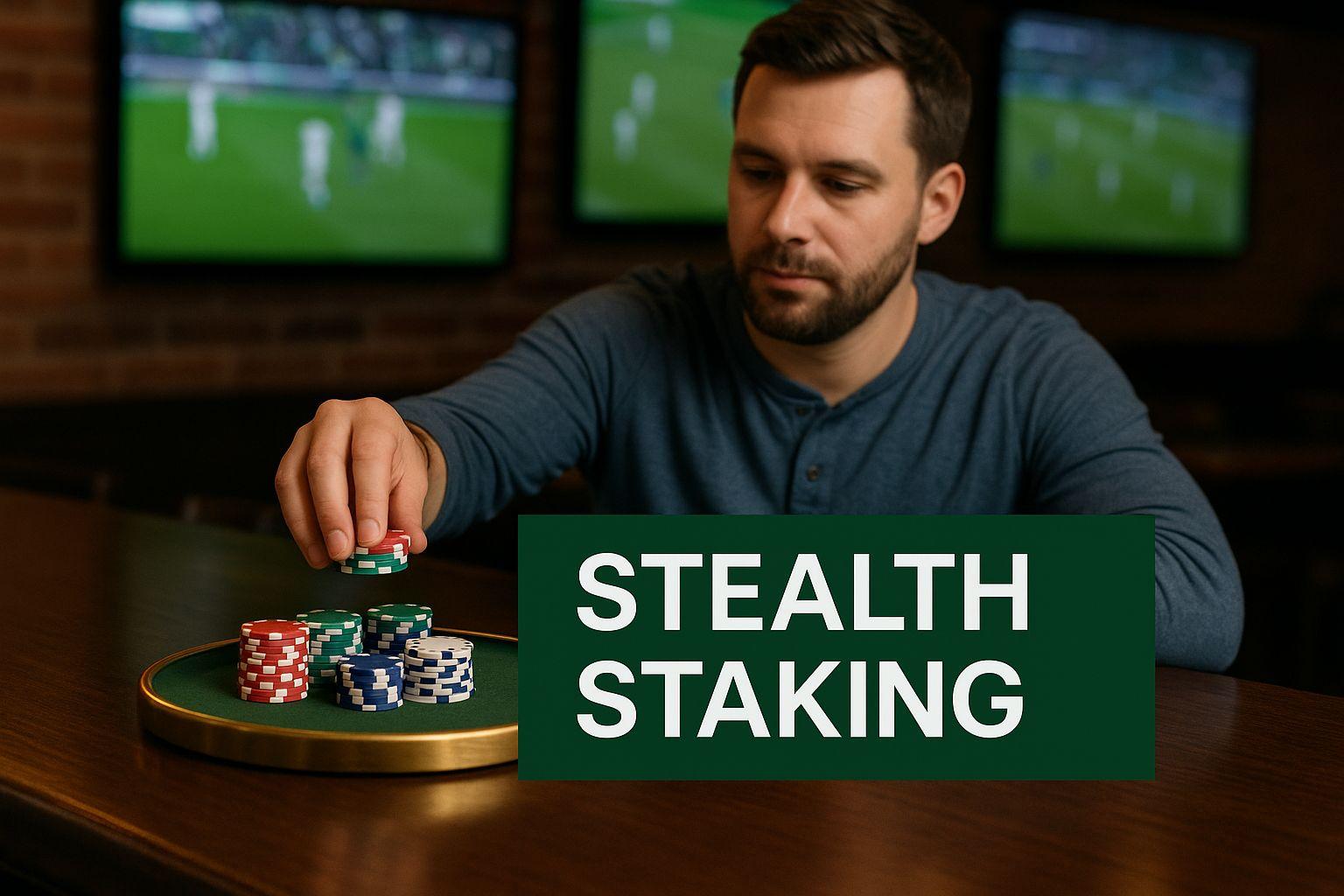
This visual just reinforces the core idea: appearing recreational through your stake selection is absolutely key to avoiding unwanted attention from the bookies.
Match Your Stake To The Market
Here's another critical piece of the puzzle: your stake size has to make sense for the event's popularity. A casual punter might drop a fairly large bet on the Super Bowl or the Champions League final, but they aren't dropping their maximum stake on an obscure table tennis match in Eastern Europe.
Betting big on low-liquidity, niche markets is a dead giveaway. It's classic professional behavior, hunting for soft lines the bookie hasn't priced correctly. They know this, and their algorithms are fine-tuned to sniff it out. Your staking should reflect a natural level of interest.
- Major Leagues (e.g., NFL, Premier League): Higher stakes look completely natural here.
- Minor Leagues (e.g., Third-division volleyball): Keep your stakes significantly smaller to avoid raising any eyebrows.
Properly managing your funds is central to this whole strategy. For a deeper dive, I highly recommend our guide on sports betting bankroll management. It'll teach you how to structure your funds for the long run. By mastering these staking principles, you create a profile that bookmakers are happy to do business with, ensuring your accounts stay open and, more importantly, profitable.
How To Blend In Your Betting Behavior

To keep your betting accounts open and unrestricted, you need to learn how to disappear into the crowd. Think like a chameleon. The goal is simple: make your betting activity look almost identical to that of a casual, everyday punter.
Sharp bettors stick out. Their precision, their market choices, their timing, it all sends signals to the bookie's risk management team. Your job is to deliberately introduce a bit of calculated "noise" into your betting patterns. It's a slight mental shift from squeezing every last drop of profit out of a single bet to playing the long game of account survival.
Embrace The Art Of The Mug Bet
One of the best ways to fly under the radar is to occasionally place what we call "mug bets." These are the kinds of wagers a sharp bettor wouldn't touch with a ten-foot pole, think low-value, high-margin bets that are the bread and butter of the average fan.
Don't think of these as wasted money. See them for what they are: a small investment in your account's health. A well-placed mug bet is a message to the bookmaker's algorithm that says, "Hey, I'm just a regular guy having fun," and that can buy you a lot of time.
Here are a few classic examples:
- Low-Stake Accumulators: A small bet on a four-fold accumulator for the weekend's Premier League matches is the perfect disguise.
- Popular Outrights: Putting a few quid on a major team to win a tournament or league months before it starts.
- First Goalscorer Bets: These are notoriously high-margin bets that absolutely scream "recreational."
Placing a $5 accumulator every so often can be more valuable than any single winning bet if it keeps your account open for another six months. It's a strategic loss leader designed for long-term survival.
Diversify Your Betting Portfolio
Another dead giveaway for a sharp is a laser-like focus on one or two obscure markets. If your account history is nothing but bets on the Estonian second-division volleyball league, you're going to get flagged. Fast.
Recreational bettors are all over the place. To blend in, you need to be, too. Start placing bets on different sports, especially the big, high-profile ones. Even if your real expertise is in a niche area, make sure your betting history is peppered with wagers on:
- Major football leagues (Premier League, La Liga, Champions League)
- Prominent US sports (NFL, NBA)
- Major tennis tournaments or golf majors
This builds a much more organic-looking betting history. It suggests you're a general sports fan, not a specialist picking off weak lines. As the global sports betting market grows, it's projected to hit $145.6 billion by 2029, more and more casual players are joining the fun. Blending in with that massive crowd is your best defense. You can read more about these market trends and see why this matters.
Sharp Bettor vs Recreational Bettor Profile
To truly blend in, you first have to understand what makes you stand out. The table below breaks down the key behaviors that bookmaker algorithms are trained to look for when flagging accounts. Your mission is to consciously shift your habits from the "High Risk" column over to the "Low Risk" side whenever you can.
| Behavioral Trait | Sharp Bettor (High Risk) | Recreational Bettor (Low Risk) |
|---|---|---|
| Bet Timing | Bets immediately when markets open to catch early, soft odds. | Bets closer to game time, often impulsively. |
| Market Choice | Focuses on obscure, low-liquidity leagues and markets. | Bets on popular, mainstream sports and high-profile events. |
| Bet Type | Almost exclusively places high-value single bets. | Frequently places accumulators, parlays, and prop bets. |
| Promotions | Only bets when a promotion offers a clear mathematical edge. | Engages with various promotions like odds boosts and free bets. |
By consciously adopting some of the habits of a recreational bettor, you're not sacrificing profit, you're protecting it. You're camouflaging your smart, profitable activity, which is the key to keeping your valuable accounts open for the long haul.
Managing Your Digital Footprint For Account Health
Every move you make online leaves a trail, and you can bet that bookmakers are expert trackers. To stay under the radar, you have to manage this digital footprint with the same care you apply to your betting strategy. This is the technical side of the game, and getting it wrong is a one-way ticket to a restricted account.
Bookmakers are constantly tracking your IP address, the device you use, browser cookies, and a whole lot more. Their goal is to build a profile of a unique, predictable, and ideally for them, unprofitable customer. The key to flying under their radar? Consistency.
Maintain Technical Consistency
Always try to bet from the same device and a consistent internet connection. Using a standard, residential IP address is absolutely non-negotiable. It signals that you are just a regular person betting from home, not someone trying to mask their location or identity.
Firing up a VPN is one of the fastest ways to get your account flagged. Bookies can easily detect most VPNs, and using one immediately suggests you have something to hide, even if you don't. This single misstep can undo all your other hard work to blend in.
Key Insight: Your digital identity is just as important as your betting history. A stable, consistent technical profile using a residential IP is the bedrock of long-term account health.
Smart Financial Management
Your deposit and withdrawal habits are also being watched closely. Sharp bettors often have a tell: they deposit, hit a value bet, and withdraw the winnings right away. This pattern is incredibly easy for algorithms to spot and is a huge red flag for aggressive, professional behavior.
To look more like a casual player, you need to change your habits:
- Don't Make Instant Withdrawals: After a nice win, resist the urge to cash out immediately. Let the funds sit in your account for a few days, maybe even a week.
- Mix It Up: Before you do withdraw, place a few smaller, recreational-style bets. This simple move breaks the "win-and-run" pattern they're looking for.
- Keep Deposits Reasonable: Large, sudden deposits can trigger manual reviews. It’s far better to build your bankroll with smaller, more regular top-ups over time.
This whole approach is designed to mimic the behavior of a recreational user, someone who sees their betting account as a fun place to keep a running balance for entertainment.
The Power Of Spreading Your Bets
Finally, and this is a big one, never put all your eggs in one basket. If you concentrate all your sharp, value-driven activity on a single bookmaker, you’re making it incredibly easy for them to profile you. Once their system flags your winning pattern, the limits will come down, hard and fast.
The solution is to spread your action across multiple bookmakers. This strategy is non-negotiable if you want to avoid limitations. Why? Because it dilutes your winning patterns, making you far less of a threat to any single operator. It also gives you access to a much wider range of odds, which helps you find more value in the first place. Think of it like diversifying a stock portfolio; you're spreading your risk and making your overall betting profile much harder to pin down.
Exploring Alternatives: Betting Exchanges And Sharp Books
Sooner or later, it happens to every successful bettor. No matter how carefully you place your bets or how well you blend in, the dreaded account limitation email arrives. But this isn't the end of your betting career. In fact, it's the opposite, it's your graduation day.
When soft bookies show you the door, it’s time to move up to a different class of betting platforms. These are places that operate on a completely different business model, one where winning isn't a problem to be solved but a natural part of the ecosystem.
Betting Exchanges: The Winner's Choice
The first and most powerful alternative is the betting exchange. Platforms like Betfair or Smarkets flip the traditional betting model on its head. Instead of betting against the "house," you're betting directly against other people. The exchange is just the middleman, taking a small commission from the winner.
This changes everything. The exchange couldn't care less if you win or lose. In fact, they want you to win and keep playing, because they only get paid when you do. That means no stake restrictions and no account closures just for being good at what you do. For a full breakdown, check out our complete guide on how a betting exchange works.
On a betting exchange, you effectively become the bookmaker. You can offer your own odds for others to take (laying a bet) or accept the odds someone else is offering (backing a bet). This gives you total freedom from the limitations that plague soft bookies.
Sharp Bookmakers: A Different Breed
Another option is to move your action to a "sharp" bookmaker. The most famous example is Pinnacle, a company that runs on a high-volume, low-margin model. They don't bother with flashy bonus offers or expensive marketing campaigns. Their entire business is built on one thing: having the most accurate odds and accepting bets from anyone, including professional syndicates.
Just look at their famous "Winners Welcome" policy, proudly highlighted on their Wikipedia page.
Their secret is that they actually use the money from sharp, winning bettors to help them sharpen their own betting lines, making their odds incredibly efficient. They welcome the pros because that "smart money" helps them create a better, more accurate market than anyone else in the business.
Of course, there's a trade-off. You'll never get limited, but finding massive value is much tougher. The odds are so sharp that you won't find the juicy, mispriced lines that are common at recreational sportsbooks.
As the industry continues to evolve, new technologies are also creating fresh avenues. The use of blockchain in sports betting is starting to emerge as another way to get around traditional bookmaker limits, with the global market projected to hit a staggering $283.70 billion by 2035. You can read more about this growing market and its technological shifts.
By understanding these alternatives, you're not just finding a new place to bet, you're future-proofing your entire strategy.
Your Questions About Bookmaker Limitations Answered
Even with the best game plan, you probably still have a few lingering questions about why bookmakers act the way they do. Let's be honest, navigating the world of sports betting means understanding the unwritten rules of engagement just as much as the written ones.
Here are some straight answers to the most common queries I hear from bettors dealing with account restrictions.
Can a Bookmaker Legally Limit My Account Just For Winning?
In a word, yes. In almost every jurisdiction, bookmakers are private businesses, and they reserve the right to choose who they do business with. Buried in their terms and conditions, you'll always find clauses that allow them to restrict or close accounts entirely at their own discretion.
Think of it as risk management from their perspective. They aren't obligated to take your action, especially if your betting patterns scream "profitable player." If you look like a long-term financial risk to their business model, they'll cut you off. It's frustrating, but it's a standard and legal, part of the industry.
If I Get Limited, Is It Permanent?
You should assume that any limitation is permanent. Once a bookmaker’s risk team flags your account as unprofitable for them, they almost never reverse that decision. It's just not worth their time.
The restriction could be anything from savage stake limits (like only being allowed to bet a few dollars) to a complete ban from all promotional offers. The odds of getting that account back to its original state are practically zero, which is why preventing it in the first place is so critical to avoiding bookmaker limitations.
Once an account is flagged and limited, that decision is almost always final. Pour your energy into protecting the accounts you still have, not trying to rescue one that's already been shut down.
Will Placing Accumulator Bets Really Help Me Avoid Limitation?
Absolutely. Strategically mixing in small-stake accumulator bets, what many of us call "mug bets," is an incredibly effective camouflage tactic. From the bookie's point of view, these wagers have a juicy built-in margin and are the hallmark of a casual, recreational punter.
By sprinkling these into your betting activity alongside your more calculated single wagers, you help your sharp bets blend in. It makes your overall profile look far less threatening and much more like the average customer they actually want. Done right, it can significantly extend the life of your account.
Is It Worth Opening Accounts in Someone Else's Name?
This is a hard no. This practice, often called "gnoming," is something you should stay far away from. Using another person's identity to open betting accounts is a direct violation of every bookmaker's terms of service and can easily be considered fraud.
Bookmakers have very strict identity verification processes (KYC checks) for a reason. If they sniff out that the account isn't being operated by the person whose name is on it, they will shut it down instantly and likely confiscate any funds inside. It's a high-risk, unsustainable strategy that can lead to much bigger problems down the line.
Ready to stop guessing and start finding real value in the odds? ValueBetFactory uses powerful algorithms to identify profitable betting opportunities for you. Stop leaving money on the table and start making smarter, data-driven decisions today. Explore our plans at ValueBetFactory.